
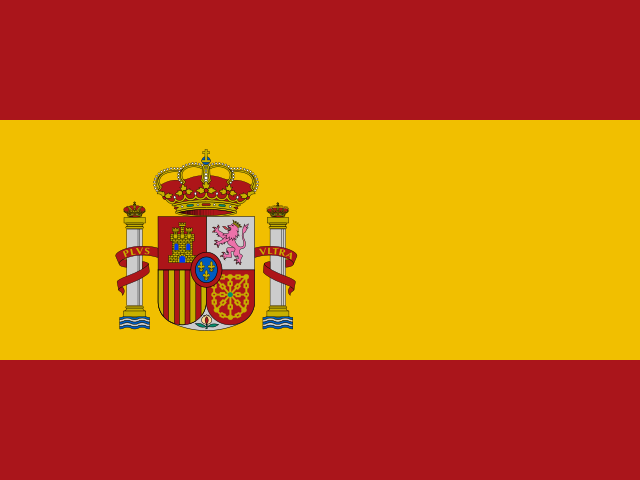
 Law of Spain
Module 1
Foundations of Spanish law: Roman and medieval roots, codification, the Constitution of 1978, the sources and hierarchy of norms, jurisprudence and European law
Spain is a **civil-law country** with a long and layered history. **Roman law** shaped it in antiquity, the **Visigoths** left a code, medieval kingdoms issued **fueros** and the great **Siete Partidas**, and in the nineteenth century the **Civil Code of 1889** brought the system under one national code, while allowing **regional civil laws** to survive. After the dictatorship of **1939 to 1975**, the **Constitution of 1978** created a **parliamentary monarchy** with strong **rights** and **regional autonomy**, and in **1986** Spain joined what is now the **European Union**. A foreigner who deals with Spain meets this system when he **buys a home, works, marries or inherits**, so the first task is to understand **where the rules come from and how they rank**.
This course explains the law of Spain, not US law. Rules that look the same elsewhere may be different.
By the end of this module you can
- Trace the path from Roman and medieval law through codification to the Constitution of 1978.
- Name the sources of law and rank them in the hierarchy of norms.
- Explain organic laws, decree-laws and regulations.
- Explain the role of jurisprudence without binding precedent.
- Explain the primacy of EU law and the place of treaties.
Part 1. The lecture
From Roman law to the Constitution of 1978
Roman and medieval roots. Under Rome the Iberian provinces (*Hispania*) received Roman law and citizenship. The Visigothic kingdom issued the Liber Iudiciorum in the seventh century, which later became the *Fuero Juzgo*. In the Middle Ages each Christian kingdom had its own fueros (local charters and customary laws), and in Castile King Alfonso X compiled the Siete Partidas (about 1265), a vast legal encyclopaedia inspired by Roman and canon law that influenced Spanish law and Latin America for centuries. After the union of the crowns, the Bourbon kings, in the Decrees of Nueva Planta (1707–1716), abolished the public law and much of the private law of the Crown of Aragon, but Navarre and the Basque provinces kept their own institutions.
Codification. The nineteenth century brought constitutions and codes. The Commercial Code dates from 1885 and the Civil Code from 1889. The Civil Code was a compromise: it applied to the whole country as common law, but **respected the *foral* civil laws of Catalonia, Aragon, Navarre, the Basque Country, Galicia and the Balearic Islands, where they existed (Module 3). The Criminal Code in force dates from 1995, replacing earlier codes. Under the dictatorship of General Franco (1939–1975) rights were restricted, and after his death a transition to democracy led to the Constitution of 1978, approved by referendum on 6 December 1978 and in force on 29 December 1978**.
| Date | Event | Why it matters |
|---|---|---|
| 7th century | The Visigothic Liber Iudiciorum | A territorial code that outlived the kingdom |
| c. 1265 | The Siete Partidas of Alfonso X | A great Roman-law compilation for Castile |
| 1707 – 1716 | The Decrees of Nueva Planta | The end of much of the Aragonese system of private law |
| 1885 / 1889 | The Commercial Code and the Civil Code | National codes that respect the foral laws |
| 1939 – 1975 | The Franco dictatorship | Centralisation and restricted rights |
| 1978 | The Constitution | A parliamentary monarchy with rights and regional autonomy |
| 1 Jan 1986 | Spain joins the European Economic Community | The start of European integration |
Sources of law and the hierarchy of norms
The sources. Article 1 of the Civil Code names the sources of the legal system: statute (*ley*), custom (*costumbre*) and the general principles of law. Custom applies only where there is no applicable statute and it is not contrary to morals or public order, and the general principles fill gaps. Jurisprudence (the decisions of the Supreme Court) is not a formal source, but it complements the legal system by interpreting and applying the statute, and the Constitutional Court’s decisions bind everyone. Article 9.3 of the Constitution guarantees legality, the hierarchy of norms, publicity of norms, legal certainty, accountability of public authorities and the non-retroactivity of unfavourable provisions.
| Norm | Who makes it | Notes |
|---|---|---|
| The Constitution | The Cortes Generales, approved by the people | The supreme norm; the Constitutional Court guards it |
| EU law and international treaties | The Union; the State with parliamentary authorisation | Treaties validly concluded and published are part of Spanish law (Article 96); EU law prevails in its field |
| Organic laws (*leyes orgánicas*) | The Cortes, by absolute majority of the Congress in a final vote | Needed for fundamental rights, statutes of autonomy and the electoral law (Article 81) |
| Ordinary laws | The Cortes | The codes are laws |
| Decree-laws (*Reales decretos-leyes*) | The Government, in cases of extraordinary and urgent need | Take effect at once but must be validated by the Congress within thirty days; cannot affect rights, basic institutions or the regions |
| Legislative decrees | The Government, on a delegation from the Cortes | Used to consolidate texts and transpose directives |
| Regional laws | The Parliaments of the Autonomous Communities | Within their powers (Module 3) |
| Regulations (*reglamentos*) | The Government, ministers and other authorities | Below laws; cannot contradict them |
| Custom and general principles | Practice and legal science | Only where there is no statute |
The hierarchy. At the top is the Constitution, then EU law in the areas where the Union has power, then organic and ordinary laws, then regulations. A law that conflicts with the Constitution can be struck down by the Constitutional Court (Module 4); a regulation that conflicts with a law is unlawful and can be annulled by the courts. EU law has primacy: Article 93 allows the transfer of powers to the Union, and the Constitutional Court has accepted that EU law prevails over conflicting national law, subject to the fundamental principles of the Constitution. Jurisprudence and doctrine. There is no doctrine of binding precedent, but repeated Supreme Court doctrine guides the courts, a lower court that departs from it without reason risks being reversed, and the principle of equality in the application of the law discourages unexplained differences. Legal doctrine (the writing of professors) is persuasive.
Worked example (invented)
The Government issues a decree-law on rents. Six weeks later the Congress has not voted on it. Pablo, a tenant, asks whether he can rely on it.
What kind of act is it? A decree-law: it takes effect at once but must be validated by the Congress within thirty days.
What happens if it is not validated? It is repealed from that point, though acts done under it in the meantime are generally preserved.
Result: He should check whether it was validated and published, and rely on the final text.
Part 2. Lab: Which Source?
Sort each item by the source of Spanish law it belongs to.
Situation 1 of 6
Article 9.3, which guarantees legality and the hierarchy of norms
Where does this belong?
Part 3. Lab: Which Norm Prevails?
Choose the best answer in each situation.
Situation 1 of 3
A national law conflicts with a directly applicable EU regulation.
What must a Spanish court do?
Part 4. Lab: Spot the Mistake
Click the statements that misstate Spanish law.
A newcomer’s notes
Click every sentence that causes a problem, then press Check. There may be 3 problems, and some sentences are fine.
Part 5. Check your understanding
Ten questions drawn from a larger pool. Sign in to have your score saved towards your certificate.
You have finished the free module
Here is what you can do now, and where the course goes next
Module 1 gave you
- Trace the path from Roman and medieval law through codification to the Constitution of 1978.
- Name the sources of law and rank them in the hierarchy of norms.
- Explain organic laws, decree-laws and regulations.
- Explain the role of jurisprudence without binding precedent.
- Explain the primacy of EU law and the place of treaties.
Next, 7 more modules and a capstone
- Module 2: The Constitution and national institutions: the parliamentary monarchy, the Crown, the Cortes Generales, the Government, the administration and electionsYou will learn to describe the fundamental principles of the Constitution.
- Module 3: The State of Autonomies and regional law: Autonomous Communities, the division of powers, foral and regional civil law, local government and languagesYou will learn to explain the State of Autonomies and statutes of autonomy.
- Module 4: Courts, the Constitutional Court and the legal professions: the judiciary, the court system, the Supreme Court, constitutional review, prosecution, lawyers, procuradores, notaries and registrarsYou will learn to explain judicial independence and the unity of jurisdiction.
- Module 5: Rights, administrative law and EU law: fundamental rights, foreign nationals, administrative procedure, administrative courts and the relationship with European lawYou will learn to describe the main fundamental rights and how they are protected.
- Module 6: The Civil Code: contracts, remedies, civil liability, property, family and inheritance, with the differences of regional civil law
- Module 7: Business, tax and employment: company forms, foreign investment, national and regional taxation, employment contracts, dismissal and social security
- Module 8: Living in Spain, criminal law and cross-border disputes: immigration, everyday legal life, offences and trials, mediation and arbitration, and private international law
- Capstone: Capstone: Grace Okafor and the Barcelona design studio
Each module has its own practice labs and a graded quiz, and a Certificate of Completion follows when you pass them all. The whole course is $15 once, or included in a Courses & AI Lab Pass.
Two Ways In
Introductory PriceSpanish Law: buy it on its own, or get it with the Courses & AI Lab Pass
Unlock all of Spanish Law on its own with a one-time purchase, or get it as part of a Courses & AI Lab Pass, which also covers every course and the other paid tools. A member never needs to buy it separately.
This is an early, introductory price for a brand-new product — it’s expected to rise as we add more content. Buy now and it’s yours at today’s rate, forever.
No account needed: you pay, and we email you a one-click sign-in.
Courses & AI Lab Pass is $29.99 a month or $249 a year, and covers every course and most tools, this one included. Create a free account to subscribe.
Look first, then buy. Free previews on every product page. Secure payment by Stripe. Pay once, keep it forever. Details
See what is included in the Courses & AI Lab Pass →Not ready to buy? Create a free account to save your quiz scores and your place in this course, and to get the printable reports from the practice rooms.
General education on the law of Spain, using invented people and businesses. It states laws and procedures in simplified form and is not legal advice. The law and its practice change, and every case turns on its facts, the region and the authority concerned. It does not offer legal representation or a legal opinion on any case. Consult a Spanish abogado for any real matter.
Teaching? Share this with your class
Free to use in class. The free parts open for everyone, no account needed.