

State Supreme Courts
Last updated on September 15, 2026
Parent Topic Guide
This analysis is part of our comprehensive reference guide on Courts.
Table of Contents
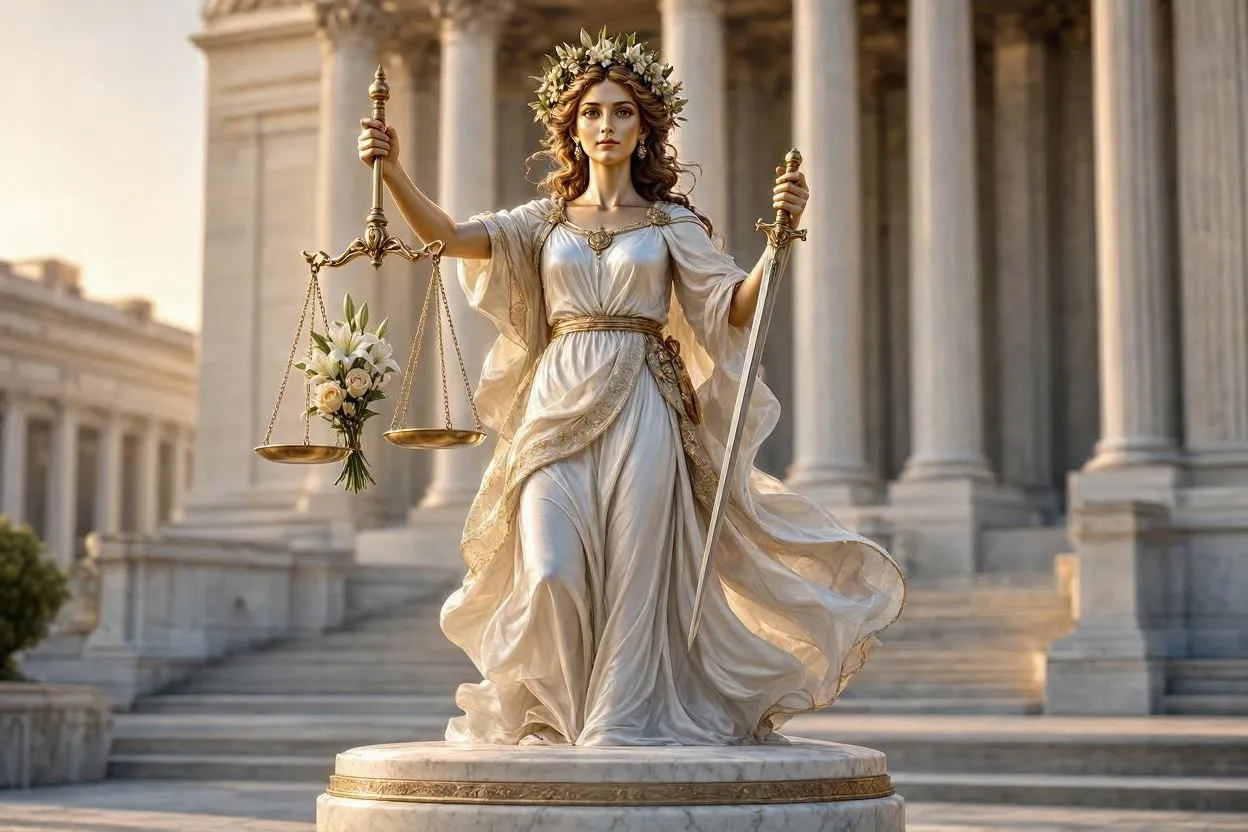
State Supreme Courts
State supreme courts occupy the highest level of the judicial hierarchy within the individual states of the United States. Although they are commonly called “supreme courts,” they are not part of the federal judiciary and are fundamentally different institutions from the Supreme Court of the United States.
Every state has a court that serves as its highest judicial authority, although the name and structure of that court can vary. In most states, the highest court is called the Supreme Court. The highest courts of some states use different names or have distinctive institutional structures.
The central responsibility of a state supreme court is to provide final judicial interpretation of state law and the state constitution. It also reviews selected decisions from lower state courts, resolves conflicts in the interpretation of state law, and establishes precedent that binds lower courts within the state.
As Cornell Law School’s Legal Information Institute explains, state courts are the final arbiters of their respective state constitutions and statutes, and the highest court in a state is commonly its supreme court. Cornell Law School Legal Information Institute’s Wex materials on state courts
State supreme courts therefore occupy a distinctive position in American federalism. They are the final judicial voice on questions of state law while remaining subject to the supremacy of the U.S. Constitution and valid federal law.
1. What Is a State Supreme Court?
A state supreme court is generally the highest court in a state’s judicial system.
Its position can be represented as:
State Trial Courts → Intermediate Appellate Courts, where they exist → State Supreme Court
The structure is not identical in every state. Some states have intermediate appellate courts, while others do not. Some states also use specialized appellate arrangements.
But where a state supreme court is the court of last resort, its decisions represent the highest level of judicial authority within that state’s court system.
This means that when a state supreme court authoritatively interprets a provision of state law, lower courts in that state generally must follow that interpretation.
The state supreme court therefore has both an adjudicative and law-developing function.
It decides individual disputes, but its decisions can establish legal principles that affect thousands of future cases.
2. State Supreme Courts Are Not the U.S. Supreme Court
The word “Supreme” can create confusion.
The Supreme Court of the United States is the highest court in the federal judiciary and has ultimate authority over questions of federal law.
A state supreme court is the highest court within one particular state judiciary.
For example:
- the Supreme Court of California is California’s highest court;
- the Supreme Court of New York is New York’s highest court;
- the Supreme Court of Texas is Texas’s highest court; and
- the Supreme Court of Florida is Florida’s highest court.
These courts are not subordinate branches of the U.S. Supreme Court in the ordinary sense.
Instead, the American judicial system contains separate federal and state judicial structures.
A state supreme court is therefore the highest judicial authority for state law within that state, while the U.S. Supreme Court is the final federal judicial authority on questions governed by federal law.
3. The Place of State Supreme Courts in Federalism
The existence of state supreme courts reflects the constitutional structure of American federalism.
The United States is not governed by a single unified judicial system.
There is a federal judiciary, and every state has its own judiciary.
State courts decide enormous numbers of disputes involving matters traditionally governed by state law, including:
- contracts;
- property;
- family law;
- probate;
- personal injury;
- criminal law;
- corporations and businesses;
- estates;
- state taxation;
- professional regulation; and
- state constitutional rights.
State supreme courts therefore have a central role in maintaining the legal order of their respective states.
They interpret state statutes, develop state common law, and determine the meaning of their own state constitutions.
4. The State Supreme Court as a Court of Last Resort
A state’s highest court is commonly described as its court of last resort.
This means that, within the state judicial system, there generally is no higher state appellate court to which a litigant can appeal.
That does not mean that the case can never reach a federal court.
If a case presents a genuine federal question, federal judicial review may sometimes remain available, subject to the applicable jurisdictional, procedural, and constitutional requirements.
But the state supreme court is ordinarily the final authority on the meaning of state law.
This distinction is fundamental.
A state supreme court may have the final word on what a state’s statute means while the U.S. Supreme Court has the final word on what the U.S. Constitution means.
5. What Cases Do State Supreme Courts Hear?
State supreme courts hear a wide range of cases, but they generally do not hear every appeal automatically.
Their caseload often includes matters involving:
- important questions of state law;
- state constitutional questions;
- conflicts between lower appellate courts;
- significant criminal cases;
- important civil disputes;
- questions affecting substantial public interests;
- unsettled legal doctrines;
- major statutory interpretation issues; and
- questions requiring statewide uniformity.
The precise jurisdiction varies by state.
Some cases may reach the highest court as a matter of right.
Others require the court to exercise discretionary review.
This distinction is essential to understanding how state supreme courts operate.
6. Mandatory and Discretionary Appellate Review
State appellate systems can distinguish between appeals that must be accepted and appeals that the highest court may choose to hear.
An appeal as of right generally means that the litigant is entitled to appellate review if the applicable procedural requirements are satisfied.
A discretionary appeal means that the higher court decides whether to accept the case.
State supreme courts frequently exercise substantial discretion over which cases they review.
Cornell’s explanation of appellate jurisdiction recognizes that states may structure appellate review through appeals as of right, discretionary appeals, or a combination of the two.
This allows a state supreme court to concentrate its resources on cases that present particularly important legal questions.
7. Why State Supreme Courts Select Cases
The highest court in a state usually does not need to decide every disagreement between litigants.
Its institutional role is broader.
A state supreme court may choose to hear a case because:
- lower appellate courts disagree;
- an important question of state law remains unresolved;
- the lower court’s interpretation has significant consequences;
- the state constitution requires clarification;
- the case presents an issue of statewide importance;
- the existing law needs clarification or reconsideration; or
- the court believes authoritative statewide guidance is necessary.
This is one of the most important distinctions between a trial court and a court of last resort.
A trial court is primarily concerned with resolving the dispute before it.
A state supreme court often considers the broader legal consequences of the dispute.
8. State Supreme Courts and State Constitutional Law
One of the most important functions of a state supreme court is interpreting the state constitution.
Every state has its own constitution.
These constitutions can contain provisions that resemble the U.S. Constitution but may also provide protections that are different or broader.
A state supreme court may therefore determine:
- what a provision of the state constitution means;
- whether a state statute violates the state constitution;
- whether government action exceeds state constitutional authority;
- whether a particular right receives independent protection under the state constitution; or
- how the state’s constitutional structure limits governmental power.
When the question concerns the meaning of the state constitution, the state’s highest court generally occupies the final position within the state judiciary.
9. State Constitutional Rights Can Differ From Federal Rights
A state constitution may provide rights independently of the U.S. Constitution.
This is sometimes described through the concept of independent state constitutional rights.
Suppose the U.S. Constitution provides a particular minimum level of protection.
A state constitution may provide greater protection.
A state supreme court may therefore interpret the state constitution as imposing additional limitations on state governmental action.
This does not mean that a state may authorize conduct prohibited by the U.S. Constitution.
Federal constitutional protections remain supreme.
But a state can sometimes provide additional protections to people within its jurisdiction.
This is an important feature of American federalism.
10. State Supreme Courts and State Statutes
State supreme courts frequently interpret state statutes.
Legislatures enact statutory language, but disputes may arise concerning what that language means when applied to particular circumstances.
The court may have to determine:
- the ordinary meaning of statutory terms;
- how different provisions interact;
- whether statutory language is ambiguous;
- whether an exception applies;
- whether a later amendment changes the interpretation; or
- how the statute fits within the broader legal system.
Once the state’s highest court authoritatively interprets the statute, lower state courts generally follow that interpretation.
The supreme court therefore plays a major role in transforming statutory language into operational legal rules.
11. State Supreme Courts and the Common Law
State supreme courts also play an important role in developing state common law.
Not every legal question is answered by a statute.
Courts may have to develop rules governing matters such as:
- negligence;
- contracts;
- property;
- remedies;
- fiduciary relationships;
- procedural doctrines; and
- other areas of judge-made law.
When the highest state court establishes a common-law rule, that rule generally becomes authoritative throughout the state unless changed by the legislature, constitutional amendment, or later judicial decision within the appropriate legal framework.
This makes state supreme courts important institutions in the development of American common law.
12. Binding Precedent Within the State
A state supreme court’s precedential decisions generally bind lower courts within that state.
This is an example of vertical precedent.
For instance, suppose the Supreme Court of State X holds that a particular state statute has a specific meaning.
A trial court in State X ordinarily cannot simply disregard that interpretation and adopt a different one.
The lower court must follow the controlling decision unless there is a legitimate legal basis for distinguishing the case or the controlling authority has changed.
Cornell’s Wex explains that binding precedent is a legal rule announced by a higher court that lower courts within the relevant jurisdiction must follow.
This hierarchical structure promotes consistency throughout the state judiciary.
13. Horizontal Precedent and State Supreme Courts
A state supreme court also has to consider its own prior decisions.
This is sometimes described as horizontal stare decisis.
The court may generally follow its earlier decisions because consistency promotes stability and predictability.
But the court may sometimes reconsider or overrule precedent.
That can occur when the court concludes that:
- the earlier decision was seriously mistaken;
- legal doctrine has developed;
- circumstances have changed;
- the earlier rule has become unworkable;
- later authority has undermined the reasoning; or
- another compelling legal reason justifies departure from precedent.
Overruling precedent is therefore possible, but it is generally treated as a significant judicial act rather than an ordinary disagreement.
14. State Supreme Courts and Conflicting Intermediate Appellate Decisions
One particularly important function of a state supreme court is resolving conflicts among lower appellate courts.
Imagine that one intermediate appellate district interprets a state statute one way while another district interprets it differently.
Different trial courts could then apply different legal rules.
This undermines statewide uniformity.
The state supreme court can resolve the conflict by issuing an authoritative interpretation.
Once the highest court establishes the governing rule, lower courts throughout the state can apply the same principle.
This is one reason state supreme courts are essential to the coherence of state law.
15. State Supreme Courts and Criminal Law
State supreme courts hear important criminal cases.
Depending on state law, these may include appeals involving:
- constitutional rights;
- criminal procedure;
- evidentiary questions;
- statutory interpretation;
- sentencing;
- sufficiency of evidence;
- jury instructions;
- prosecutorial conduct;
- search and seizure;
- confessions;
- confrontation rights; and
- other significant questions of criminal law.
The court may also interpret provisions of the state’s criminal statutes and constitution.
Because criminal law directly affects individual liberty, state supreme courts often play an important role in establishing statewide procedural and substantive rules.
16. State Supreme Courts and Civil Litigation
State supreme courts also hear significant civil cases.
These can involve:
- contracts;
- business disputes;
- property;
- torts;
- family law;
- estates;
- probate;
- insurance;
- employment;
- damages;
- taxation; and
- statutory interpretation.
The highest court may be particularly interested in civil cases that present unresolved questions affecting large numbers of people.
A decision involving one contract dispute, for example, may establish a rule that governs thousands of similar contracts throughout the state.
17. State Supreme Courts and Government
State supreme courts can also hear disputes involving governmental institutions.
These may concern:
- state agencies;
- governors;
- legislatures;
- local governments;
- public officials;
- administrative regulations;
- elections;
- taxation; and
- separation of powers within the state government.
State constitutional disputes can be particularly significant because the court may have to determine the boundaries between branches of state government.
The state supreme court therefore participates in the constitutional structure of the state itself.
18. Judicial Review by State Supreme Courts
State supreme courts exercise judicial review within the framework of their state constitutions and federal law.
They may determine that a state statute conflicts with the state constitution.
They may also consider whether governmental action violates the U.S. Constitution or federal law when such issues properly arise in a case.
But a state supreme court is not the final authority on federal constitutional meaning.
The U.S. Supreme Court ultimately has the final judicial authority on questions of federal constitutional law.
Thus, state judicial review operates within the larger federal constitutional system.
19. State Supreme Courts and the U.S. Supreme Court
The relationship between the two levels can be summarized simply:
State Supreme Court → Final authority on state law
U.S. Supreme Court → Final authority on federal law
The distinction becomes particularly important when a state case contains both state and federal questions.
Suppose a defendant argues that a state statute violates both:
- the state constitution; and
- the U.S. Constitution.
The state supreme court may decide both questions if they are properly presented.
But if the case reaches the U.S. Supreme Court, that federal court can review the federal constitutional question.
The U.S. Supreme Court generally does not function as an ordinary appellate court for pure questions of state law.
20. The Adequate and Independent State Ground Principle
A particularly important limitation on federal review arises when a state court judgment rests on an adequate and independent state-law ground.
If a state supreme court resolves a case entirely on an independent state-law basis, the U.S. Supreme Court generally does not have authority to reverse the judgment merely because it disagrees with the state’s interpretation of its own law.
This principle protects the constitutional division between federal and state judicial authority.
The federal courts interpret federal law.
State courts have the final word on their own state law.
That division is fundamental to federalism.
21. State Supreme Court Judges
Judges on state supreme courts are selected differently from federal judges.
Depending on the state, supreme court justices may be:
- elected;
- appointed by the governor;
- appointed through a merit-selection system;
- confirmed by another governmental body;
- subject to retention elections; or
- selected through another state-specific mechanism.
There is no single national appointment system for state supreme court justices.
Terms of office also vary.
Some states provide relatively long terms, while others use different systems of appointment, election, and retention.
This is one of the major institutional differences between state supreme courts and the federal Supreme Court.
22. State Supreme Court Justices Do Not Generally Have Federal-Style Life Tenure
Federal Article III judges ordinarily hold office during “good Behaviour,” which has traditionally been understood to provide life tenure absent resignation, retirement, death, or removal through impeachment and conviction.
State supreme court justices generally operate under different constitutional arrangements.
Their terms may be fixed.
They may face elections or retention votes.
They may be appointed for a defined period.
They may also be subject to state-specific judicial discipline and removal mechanisms.
Therefore, the institutional independence of state judges must be understood within each state’s constitutional system.
23. Judicial Independence in State Supreme Courts
State supreme court justices must be able to decide cases according to law rather than political pressure.
Judicial independence is particularly important because state supreme courts sometimes decide highly controversial questions involving:
- constitutional rights;
- elections;
- taxation;
- abortion;
- criminal justice;
- government power;
- business regulation;
- property rights; and
- separation of powers.
At the same time, states use different methods to balance judicial independence with democratic accountability.
This makes judicial selection a significant feature of state constitutional design.
24. The Composition of State Supreme Courts
The number of justices varies from state to state.
Some state supreme courts have relatively small memberships, while others have larger benches.
The number of judges is generally established by the state’s constitution or statutes.
The court may have a chief justice or chief judge who performs both judicial and administrative functions, depending on the state’s structure.
The terminology also differs.
Some states call members “justices,” while others may use different titles.
The important point is that there is no constitutionally required national model for state supreme courts.
25. Oral Argument Before a State Supreme Court
State supreme courts commonly decide important cases through written briefs and, where permitted, oral argument.
Oral argument gives the justices an opportunity to question attorneys directly.
Questions may concern:
- statutory language;
- constitutional text;
- precedent;
- factual assumptions;
- the consequences of a proposed legal rule;
- competing interpretations; and
- the appropriate remedy.
Oral argument is not a retrial.
The justices ordinarily work from the appellate record and the legal arguments properly presented under the state’s appellate rules.
26. Opinions of State Supreme Courts
A state supreme court may issue several types of judicial opinions.
A majority opinion states the court’s controlling reasoning and judgment.
A concurrence agrees with the result but may rely on different reasoning.
A dissent disagrees with the majority.
The precise terminology and publication rules vary among states.
The majority’s holding is generally the authoritative rule of the case.
Separate opinions can nevertheless influence future legal development by presenting alternative interpretations or arguments that later courts may find persuasive.
27. Holding and Dicta
As with other appellate courts, it is important to distinguish a court’s holding from dicta.
The holding is the legal rule necessary to resolve the case.
Dicta consists of statements that are not necessary to the judgment.
The distinction matters because not every sentence in a state supreme court opinion necessarily carries the same precedential force.
Lawyers and judges therefore examine opinions carefully to determine:
- what issue was actually decided;
- what rule was necessary to the decision;
- what factual circumstances were material; and
- what statements were merely explanatory or hypothetical.
28. State Supreme Courts and Advisory Opinions
State supreme courts generally function through actual cases and controversies rather than serving as general legal advisers.
The exact rules vary by state, however.
Some state constitutions provide mechanisms that allow the highest court to issue opinions in particular circumstances, while others more strictly restrict courts to adjudicating actual disputes.
This illustrates another important point:
State constitutional structures are not identical to Article III of the U.S. Constitution.
The precise limits on judicial power must therefore be determined under the law of the particular state.
29. Original Jurisdiction in State Supreme Courts
State supreme courts may possess forms of original jurisdiction.
The precise scope varies significantly.
A state constitution or statute may authorize the highest court to issue extraordinary writs or hear particular categories of proceedings directly.
These may include matters involving:
- writs of mandamus;
- habeas corpus;
- prohibition;
- election disputes;
- extraordinary governmental actions; or
- other specially defined proceedings.
This should not be confused with the ordinary appellate role of the court.
In most cases, state supreme courts are functioning as reviewing courts rather than trial courts.
30. Extraordinary Writs
A state supreme court may have authority to issue extraordinary writs when ordinary appellate procedures are inadequate.
For example, a party may seek mandamus to compel a public official or lower court to perform a legally required duty.
Such extraordinary remedies are generally exceptional.
They are not simply substitutes for ordinary appeals.
Their availability and requirements depend heavily on state law.
This gives state supreme courts another constitutional and institutional role beyond ordinary appellate review.
31. State Supreme Courts and Administrative Law
State supreme courts may review legal questions arising from administrative agencies.
State agencies exercise authority delegated by state legislatures.
Disputes may arise concerning:
- agency interpretation of statutes;
- regulatory authority;
- licensing;
- professional discipline;
- public benefits;
- environmental regulation;
- taxation; or
- other administrative decisions.
The state supreme court may ultimately determine whether the agency acted within the authority granted by state law.
The precise standard of review depends on the state’s constitution, statutes, administrative procedure laws, and judicial doctrine.
32. State Supreme Courts and Elections
State supreme courts can become especially important during election disputes.
Litigation may concern:
- interpretation of election statutes;
- ballot access;
- election procedures;
- recounts;
- candidate eligibility;
- voting rules;
- deadlines; or
- state constitutional requirements.
Because election law is often governed heavily by state constitutions and statutes, state supreme courts may have a significant role in determining how elections are administered.
When federal constitutional or statutory questions are also involved, federal judicial review may become relevant.
33. State Supreme Courts and Separation of Powers
State supreme courts can play an important role in defining the boundaries among the branches of state government.
A dispute might arise between:
- the governor and legislature;
- a state agency and legislature;
- a legislature and judiciary;
- a local government and the state; or
- another governmental institution.
The state supreme court may be required to interpret the state constitution to determine whether one branch has exceeded its lawful authority.
This makes the state supreme court an important constitutional institution, not merely an appellate tribunal.
34. State Supreme Courts and Local Governments
State supreme courts can also decide questions involving counties, cities, municipalities, school districts, and other local governmental bodies.
State law frequently determines the authority of local governments.
A dispute may therefore require the court to determine:
- whether a municipality had legal authority to act;
- whether a local ordinance conflicts with state law;
- whether taxation was authorized;
- whether a local government exceeded delegated powers; or
- whether state constitutional protections apply.
Because local governments operate within state constitutional and statutory frameworks, state supreme courts can have significant influence over local governance.
35. State Supreme Courts as Final Interpreters of State Law
Perhaps the most important principle to remember is this:
A state’s highest court generally has the final word on the meaning of that state’s law.
Federal courts applying state law ordinarily must follow the authoritative interpretation supplied by the state’s highest court.
If the state supreme court has not yet answered a particular question, a federal court may have to predict how the state’s highest court would decide it.
If the state supreme court later provides an authoritative interpretation, that decision becomes controlling on the state-law question.
This relationship is especially important in diversity jurisdiction and other federal cases involving state law.
36. Federal Courts Must Respect State Supreme Court Interpretations of State Law
Suppose a federal district court is hearing a diversity case involving a disputed state contract statute.
The federal court must apply the relevant state’s substantive law.
If the state’s supreme court has already interpreted the statute, the federal court ordinarily must follow that interpretation.
The federal court cannot simply substitute its own preferred understanding of the state’s statute.
This illustrates the relationship between the two judicial systems:
Federal courts interpret and apply state law when federal jurisdiction requires it, but state supreme courts remain the authoritative interpreters of state law.
37. State Supreme Courts and Federal Constitutional Questions
The relationship becomes more complicated when a case involves both state and federal constitutional law.
A state supreme court may interpret the state constitution independently.
It may also apply the U.S. Constitution.
But the federal Constitution establishes a national floor of constitutional protection.
A state may provide greater protection under its own constitution, but it cannot lawfully provide less protection than federal law requires.
The U.S. Supreme Court ultimately determines the meaning of the U.S. Constitution.
State supreme courts determine the meaning of their own constitutions, subject to federal constitutional limits.
38. State Supreme Courts and Precedent Beyond Their State
A state supreme court’s decisions generally bind courts within that state.
They do not automatically bind courts in other states.
For example, a decision of the Supreme Court of New York does not establish mandatory precedent for a court in California.
Other courts may consider such a decision persuasive, particularly when the legal issue is unsettled.
Cornell’s discussion of persuasive authority explains that decisions from other jurisdictions generally do not bind a court but may still carry persuasive weight.
This is another consequence of the federal structure of American law.
There are fifty state judicial systems, each capable of developing its own body of state law.
39. Why State Supreme Court Decisions Matter Beyond the Parties
A state supreme court decision can affect far more people than the litigants who brought the case.
Suppose a court interprets a state statute governing:
- landlord-tenant relationships;
- employment;
- insurance;
- consumer protection; or
- taxation.
The resulting rule may affect thousands or millions of future transactions.
This is why state supreme court litigation often attracts attention from:
- businesses;
- government agencies;
- professional organizations;
- civil rights groups;
- trade associations;
- public-interest organizations; and
- other potential amici.
The legal consequences of a high-court decision can extend throughout an entire state.
40. Amicus Curiae Participation
Important state supreme court cases may attract amicus curiae briefs.
An amicus curiae, or “friend of the court,” is a person or organization that is not ordinarily a party to the litigation but provides information or legal arguments that may assist the court.
Amicus briefs can help the court understand:
- broader practical consequences;
- industry practices;
- historical context;
- constitutional implications;
- policy consequences; or
- arguments that the parties themselves have not emphasized.
The rules governing amicus participation vary by state.
41. State Supreme Courts and Judicial Administration
The highest court in a state may also have important administrative responsibilities.
Depending on the state’s constitution and statutes, the supreme court may participate in:
- administration of the state judiciary;
- adoption or supervision of court rules;
- judicial discipline;
- attorney regulation;
- continuing legal education requirements;
- access-to-justice initiatives; and
- other institutional functions.
These responsibilities vary significantly.
A state supreme court therefore may have a broader role in the administration of justice than simply deciding appeals.
The National Center for State Courts, for example, notes that state supreme courts play an important leadership role in the regulation of the legal profession and access to competent representation.
42. State Supreme Courts and Court Rules
State supreme courts may have authority under state law to promulgate or supervise procedural rules.
These can govern matters such as:
- appellate procedure;
- trial procedure;
- evidence;
- attorney conduct;
- judicial administration; and
- other aspects of court operation.
The source of that authority varies by state.
In some states, legislative and judicial authority over court rules interact in complex ways.
The important point is that the highest state court may have responsibilities extending beyond individual opinions.
43. State Supreme Courts and Attorneys
In many states, the highest court has a significant role in regulating the legal profession.
That may include matters concerning:
- admission to practice;
- attorney discipline;
- professional conduct rules;
- suspension;
- disbarment;
- reinstatement; and
- continuing obligations of licensed attorneys.
The exact institutional arrangement differs from state to state.
Nevertheless, the relationship between the highest court and the legal profession illustrates the broader constitutional role of state judiciaries.
44. State Supreme Courts and Judicial Discipline
State supreme courts may also participate in judicial disciplinary systems.
A judge who violates applicable ethical rules may be subject to investigation and discipline under the state’s judicial conduct system.
The precise process varies.
Depending on the state, disciplinary matters may involve:
- a judicial conduct commission;
- disciplinary counsel;
- the supreme court;
- another designated body; or
- several institutions working together.
The goal is to maintain public confidence while preserving judicial independence.
45. State Supreme Courts and Access to Justice
The highest courts also have an institutional interest in ensuring that the judicial system remains accessible.
This can involve initiatives concerning:
- self-represented litigants;
- court technology;
- language access;
- disability accommodations;
- legal assistance;
- simplified procedures;
- court administration; and
- public understanding of the judicial system.
The precise authority of the court varies, but state supreme courts can have significant influence over how justice is administered throughout the state.
46. What Happens After a State Supreme Court Decision?
Once a state supreme court issues its decision, the lower court generally must follow the judgment and controlling legal principles.
If the case is remanded, the lower court continues proceedings consistent with the supreme court’s instructions.
If the judgment is affirmed, the lower court’s decision generally remains in effect.
If the judgment is reversed, the lower court must comply with the appellate court’s ruling.
If the case presents a federal question, a party may in some circumstances seek review by the U.S. Supreme Court.
But there is no automatic right to have every state supreme court decision reviewed by the federal Supreme Court.
The U.S. Supreme Court has its own jurisdictional and case-selection requirements.
47. Can the U.S. Supreme Court Reverse a State Supreme Court?
Yes—but only on an appropriate federal issue.
The U.S. Supreme Court does not sit above state supreme courts as a general court of appeal for state law.
It may review a state supreme court judgment when the case presents a qualifying federal question within the Supreme Court’s jurisdiction.
For example, the U.S. Supreme Court may review whether a state supreme court correctly applied the U.S. Constitution.
But it generally does not review a state court merely because it disagrees with the state’s interpretation of its own statute.
This distinction protects the autonomy of state legal systems.
48. State Supreme Courts and the Rule of Law
State supreme courts contribute significantly to the rule of law.
Their decisions provide authoritative interpretations of state law.
Their precedents guide lower courts.
Their constitutional decisions establish limits on governmental power.
Their administrative responsibilities can promote consistency throughout the judiciary.
And their final decisions create a degree of legal certainty that allows individuals, businesses, and governments to organize their conduct around established legal principles.
A functioning legal system requires both authority and predictability.
State supreme courts contribute to both.
49. Why State Supreme Courts Matter to Ordinary People
A state supreme court may appear remote from everyday life.
In reality, its decisions can affect ordinary questions involving:
- whether a contract is enforceable;
- how property rights are defined;
- what protections employees receive;
- how landlords and tenants interact;
- how criminal proceedings are conducted;
- what evidence may be admitted;
- how damages are calculated;
- how government agencies exercise authority; and
- what rights are protected by the state constitution.
The court’s decision may establish a rule that applies to everyone within the state.
Its work therefore has practical consequences far beyond the courtroom.
50. A Simple Example
Imagine that the legislature of State A passes a statute regulating liability for defective consumer products.
A dispute reaches the state trial court.
The trial court interprets the statute one way.
The intermediate appellate court affirms.
The state’s supreme court accepts further review because the statute affects thousands of businesses and consumers and its meaning is disputed.
After briefing and oral argument, the supreme court interprets the statute.
The court holds that manufacturers are liable under a particular set of circumstances.
That interpretation now provides authoritative guidance for lower courts throughout State A.
The original dispute involved only one consumer and one manufacturer.
The legal principle established by the supreme court may affect an entire state.
This is one of the defining characteristics of a court of last resort.
51. State Supreme Courts Compared With Intermediate Appellate Courts
The distinction can be summarized as follows:
| Feature | Intermediate Appellate Court | State Supreme Court |
|---|---|---|
| Position | Intermediate appellate level | Highest state court |
| Main function | Review lower-court decisions | Final state-level appellate authority |
| Review | Often broader and more routine | Often selective or discretionary |
| Statewide authority | Important | Generally controlling |
| Resolves appellate conflicts | Sometimes | Major institutional function |
| Final interpreter of state law | No | Yes |
| Final interpreter of state constitution | Generally no | Yes |
| Further state appeal | Usually possible | Generally none |
| Federal Supreme Court review | Not directly in ordinary hierarchy | Possible on qualifying federal issues |
The state supreme court is therefore not merely another appellate court.
It is the court that provides final judicial authority within the state’s own legal system.
52. State Supreme Courts Compared With the U.S. Supreme Court
The distinction is equally important at the federal level.
| Feature | State Supreme Court | U.S. Supreme Court |
|---|---|---|
| Judicial system | State | Federal |
| Primary legal authority | State law and state constitution | Federal law and U.S. Constitution |
| Geographic authority | One state | United States |
| Highest court in | State judiciary | Federal judiciary |
| Judges | Selected under state law | Nominated by President and confirmed by Senate |
| Terms | Vary by state | Article III good-behavior tenure |
| State constitutional interpretation | Final state authority | Generally not final authority |
| Federal constitutional interpretation | May decide | Final federal authority |
| Review of state law | Authoritative within state | Generally not ordinary review |
| Review by another court | U.S. Supreme Court may review qualifying federal questions | No higher U.S. court |
This distinction is fundamental to understanding American courts.
Key Takeaways
- A state supreme court is generally the highest court in a state’s judicial system.
- It is separate from the federal Supreme Court.
- State supreme courts are generally the final interpreters of their own state’s law and constitution.
- They often exercise discretionary appellate review rather than automatically hearing every appeal.
- They resolve important questions of state statutory and constitutional law.
- They can resolve conflicts among lower state appellate courts.
- Their precedential decisions generally bind lower courts within the state.
- State supreme court justices are selected according to state-specific systems rather than the federal appointment process.
- Their terms and methods of selection vary substantially from state to state.
- They may have important administrative responsibilities involving the state judiciary and legal profession.
- They can decide federal constitutional questions, but the U.S. Supreme Court remains the final authority on federal constitutional law.
- The U.S. Supreme Court does not ordinarily review a state supreme court merely because it disagrees with the state’s interpretation of its own law.
- State supreme courts are essential institutions of federalism because they preserve authoritative state-level interpretation of state law.
Frequently Asked Questions
Is the state supreme court the highest court in every state?
Every state has a court of last resort, but the name and structure vary. In most states, that court is called the supreme court.
Is a state supreme court part of the federal judiciary?
No. It belongs to the judiciary of the individual state.
Can a state supreme court interpret the U.S. Constitution?
Yes. State courts can decide federal constitutional questions that properly arise in cases before them. However, the U.S. Supreme Court has the final authority on the meaning of the U.S. Constitution.
Can a state supreme court overrule its own previous decisions?
Generally, yes, although the standards and circumstances governing departure from precedent vary by state. Overruling precedent is ordinarily treated as a significant judicial act.
Are state supreme court decisions binding?
Their precedential decisions generally bind lower courts within the state on questions of state law, subject to the state’s rules governing precedent.
Can a federal court disagree with a state supreme court about state law?
A federal court generally must follow the authoritative interpretation of state law supplied by the state’s highest court. A federal court does not ordinarily substitute its own interpretation simply because it would have decided the state-law question differently.
Can the U.S. Supreme Court review a state supreme court decision?
Yes, when the case presents a qualifying federal question within the U.S. Supreme Court’s jurisdiction. It does not ordinarily review purely state-law questions.
Are state supreme court justices appointed for life?
Not generally. State judicial selection and tenure systems vary. Many states use fixed terms, elections, appointments, or retention elections.
Do state supreme courts hear every appeal?
No. The highest state court often exercises discretionary review and selects cases presenting important legal questions or other issues that satisfy the state’s criteria for review.
Can a state supreme court strike down a state statute?
Yes. A state supreme court may determine that a state statute violates the state constitution or conflicts with another controlling legal provision.
Do all states have intermediate appellate courts below their supreme courts?
No. Some states have intermediate appellate courts, while others use a different appellate structure.
Why are state supreme courts so important?
They provide authoritative interpretations of state law, resolve major state constitutional questions, establish binding precedent, and provide final judicial review within the state system.
Conclusion
State supreme courts are indispensable institutions in the American legal system. They represent the highest level of judicial authority within individual states and serve as the final judicial interpreters of state constitutions, statutes, and common law.
Their role is broader than simply correcting mistakes made by lower courts. They provide statewide legal uniformity, resolve conflicts among appellate courts, clarify ambiguous statutes, develop common-law doctrines, and determine the constitutional limits of state governmental power.
At the same time, their authority exists within the federal structure of the United States. A state supreme court is generally the final authority on state law, while the U.S. Supreme Court is the final judicial authority on federal law and the U.S. Constitution.
This division of authority is one of the defining characteristics of American federalism.
For an ordinary litigant, the state supreme court may represent the final stage of a long judicial process. For the legal system as a whole, however, its importance is much greater. Its decisions establish rules that lower courts, government agencies, lawyers, businesses, and citizens may rely upon throughout the state.
The state supreme court therefore performs two functions at once: it resolves individual disputes, and it defines the law of the state.
The information provided in this article ("State Supreme Courts") is for general educational and informational purposes only and does not constitute formal legal advice. Reading this content does not create an attorney-client relationship. Laws vary by jurisdiction; consult a licensed attorney for specific legal matters.

Tsvety, LL.M., M.A.
Today’s Quiz
Property Law
10 real questions, free, no account needed. See how well you actually know property law.

Free This Week
Open this week’s Legal Concept Presentation
A downloadable, branded slide deck explaining one key legal term in depth — free every week, the full library included with All-Access.

Interactive Legal Suite
Advance Your Legal Analysis
Explore our interactive decision trees, litigation pipeline builders, and procedural court simulators — designed specifically for law students and practitioners.
Access Interactive Tools →Enjoy The Law To Know?
Tell Google you’d like to see more from us in Search and AI Overviews.

Discussion
Log in to join the discussion.
No comments yet — be the first to add to the discussion.