

Judicial Review in the United States
Last updated on September 15, 2026
Parent Topic Guide
This analysis is part of our comprehensive reference guide on Courts.
Table of Contents
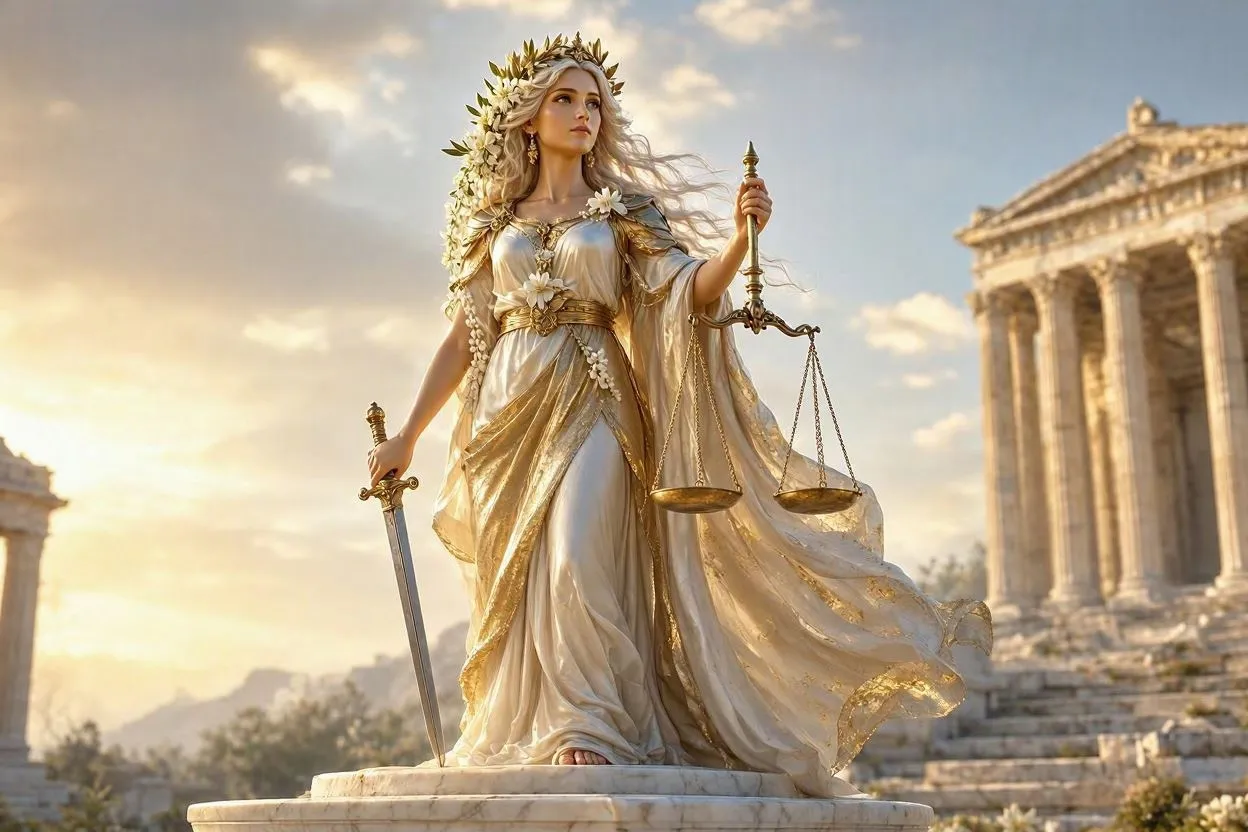
Judicial Review in the United States
Judicial review is the power of a court to determine whether a law, governmental action, or other exercise of governmental authority is consistent with the Constitution or other controlling law.
It is one of the defining features of the American constitutional system.
Through judicial review, courts can be asked to determine whether governmental institutions have acted within the authority granted to them by the Constitution and by law. When a court concludes that a governmental action conflicts with the Constitution, the court may provide an appropriate remedy within the scope of its authority.
Judicial review is therefore closely connected to constitutional supremacy, separation of powers, federalism, and the rule of law.
The principle is also frequently misunderstood. Judicial review does not mean that courts have unlimited power to supervise every governmental decision. Federal courts do not issue constitutional rulings simply because someone asks them to express an opinion. Judicial review ordinarily arises within an actual case or controversy that satisfies the requirements of federal judicial power.
The modern doctrine of federal judicial review is strongly associated with the Supreme Court’s landmark 1803 decision in Marbury v. Madison. But the broader principle rests on a deeper constitutional idea: the Constitution is law, and courts must apply controlling law when deciding cases properly before them.
The Cornell Law School Legal Information Institute’s Wex materials on judicial review provide a useful reference for the basic concept.
1. What Is Judicial Review?
Judicial review is the process through which courts examine governmental action and determine whether it complies with the Constitution or other applicable law.
The governmental action being reviewed may include:
- a federal statute;
- a state statute;
- an executive order;
- an administrative action;
- a regulation;
- a government policy;
- an action by a public official; or
- another exercise of governmental authority.
Suppose Congress passes a statute that allegedly violates the First Amendment.
A person affected by the statute may bring an appropriate legal challenge. If the requirements for judicial review are satisfied, the court may determine whether the statute is constitutional.
Similarly, suppose a state law allegedly violates a federal constitutional right. A properly presented case may require a federal or state court to decide whether the state law is consistent with the Constitution.
Judicial review is therefore a mechanism for testing governmental action against superior legal rules.
2. Why Is Judicial Review Important?
The United States Constitution establishes limits on governmental power.
Those limits would be difficult to enforce if the government were always the final judge of whether it had exceeded its constitutional authority.
Judicial review provides an institutional mechanism for enforcing constitutional boundaries.
For example, the Constitution limits governmental power in areas involving:
- freedom of speech;
- religious liberty;
- due process;
- equal protection;
- unreasonable searches and seizures;
- federal legislative authority;
- executive authority;
- federalism;
- separation of powers; and
- other constitutional protections and structural limitations.
When a legitimate legal dispute requires a court to determine whether governmental conduct violates one of these limitations, judicial review allows the judiciary to perform that function.
3. The Constitutional Foundation of Judicial Review
The Constitution does not contain a single sentence stating:
“The Supreme Court shall have the power of judicial review.”
Instead, judicial review developed from the structure and operation of the Constitution.
Several constitutional principles are particularly important.
First, the Constitution is the supreme law of the United States.
Second, Article III vests federal judicial power in the federal courts.
Third, federal courts decide cases and controversies rather than issuing abstract political opinions.
Fourth, courts must apply the law governing the dispute.
When a court must choose between a constitutional rule and a conflicting governmental enactment, the Constitution controls.
This reasoning became especially prominent in Marbury v. Madison.
4. Marbury v. Madison
The most famous case associated with judicial review is Marbury v. Madison, decided by the Supreme Court in 1803.
The case arose during a politically significant transition between presidential administrations.
William Marbury had been appointed as a justice of the peace by President John Adams near the end of Adams’s presidency. Marbury’s commission was not delivered before Thomas Jefferson became President.
Marbury sought a writ of mandamus directing Secretary of State James Madison to deliver the commission.
The Supreme Court, led by Chief Justice John Marshall, confronted several legal questions, including whether Marbury had a right to the commission, whether the law provided a remedy, and whether the Supreme Court had authority to issue the requested writ.
The Court ultimately concluded that the statutory provision purporting to give the Supreme Court authority to issue the writ in the circumstances exceeded what the Constitution permitted.
The Court therefore treated the conflicting statutory provision as legally ineffective in that context.
The decision became a foundational statement of judicial review.
5. What Marbury v. Madison Established
Marbury v. Madison is significant because Chief Justice Marshall articulated the principle that courts must apply the Constitution when ordinary legislation conflicts with it.
The basic reasoning was:
- The Constitution is superior law.
- Courts must determine the law applicable to cases before them.
- If an ordinary statute conflicts with the Constitution, the Constitution controls.
- Therefore, courts cannot give legal effect to a statutory provision that is inconsistent with the Constitution in the case before them.
The importance of Marbury is not simply that the Supreme Court declared one statutory provision invalid.
Its deeper significance is that the Court explained why constitutional review belongs within the judicial function.
6. Judicial Review Before Marbury
It would be inaccurate to suggest that the idea of judicial review suddenly appeared for the first time in 1803.
The concept had roots in earlier American legal thought and judicial practice.
Courts before Marbury had considered whether legislative enactments were consistent with higher law, and colonial legal traditions had also recognized forms of judicial scrutiny of governmental authority.
State courts had already addressed conflicts between constitutions and legislation.
The significance of Marbury was therefore not necessarily the invention of every aspect of judicial review.
Rather, the decision provided an especially influential constitutional explanation of the judiciary’s role in applying the Constitution over conflicting ordinary law.
7. Judicial Review and Constitutional Supremacy
Judicial review depends heavily on the principle of constitutional supremacy.
The Constitution is not simply a political statement.
It is a binding legal framework that establishes governmental powers and limitations.
When an ordinary statute conflicts with the Constitution, the statute cannot override the constitutional provision.
This creates a hierarchy of legal authority.
In simplified form:
Constitution → valid federal law → regulations and other subordinate legal authority
The precise hierarchy can become more complicated depending on the source of law and the legal issue involved, but the fundamental principle remains:
Governmental authority must operate within constitutional boundaries.
Judicial review provides a mechanism for enforcing those boundaries in appropriate cases.
8. Judicial Review Is Part of Judicial Power
Judicial review is closely related to judicial power but should not be treated as identical to it.
Judicial power is the broader authority of courts to adjudicate cases and controversies.
Judicial review is an application of that authority in which a court determines whether governmental action complies with the Constitution or another controlling legal rule.
For example, a court resolving an ordinary breach-of-contract dispute may exercise judicial power without engaging in constitutional judicial review.
By contrast, if one party argues that a federal statute governing the dispute violates the Constitution, the court may need to exercise judicial review.
This distinction helps explain why judicial review does not turn courts into general political overseers.
They exercise review through their judicial function.
9. Judicial Review Requires a Proper Case
Federal judicial review normally occurs within an actual legal dispute.
A person cannot ordinarily walk into federal court and ask:
“Is this statute constitutional?”
without satisfying the constitutional and statutory requirements for federal adjudication.
Federal courts generally require an appropriate case or controversy.
This requirement is fundamental.
The judiciary is not designed to provide general legal advice to the political branches or members of the public.
Instead, courts resolve disputes presented by parties with legally cognizable interests.
Judicial review is therefore generally case-driven rather than purely advisory.
10. Standing and Judicial Review
Standing is one of the principal limitations on federal judicial review.
A plaintiff generally must demonstrate the type of legally sufficient injury required by Article III and applicable law.
The requirement helps ensure that the plaintiff has a genuine stake in the dispute.
For example, someone may strongly disagree with a federal law as a matter of policy but still lack standing to challenge it in federal court.
Another person who suffers a legally cognizable injury because of the law may have standing.
The distinction is important:
Political disagreement does not automatically create standing.
Federal judicial review generally requires more than a desire to obtain a constitutional ruling.
11. Ripeness and Judicial Review
A dispute must also be sufficiently developed for judicial resolution.
This is the principle of ripeness.
A constitutional challenge may be premature if the alleged injury is speculative or the challenged governmental action has not yet affected the plaintiff in a sufficiently concrete way.
For example, a person may fear that a government policy could eventually affect them but have no present legal injury.
In such circumstances, a court may conclude that the dispute is not yet ripe.
Ripeness prevents federal courts from deciding constitutional questions based on hypothetical future events.
12. Mootness and Judicial Review
A case that once presented a genuine controversy may later become moot.
This can happen when circumstances change so that the parties no longer have a sufficient live dispute.
For example, if a plaintiff seeks an injunction against a government action that has completely ended and there is no continuing legal consequence or applicable exception, the dispute may no longer require judicial resolution.
Mootness therefore limits judicial review by preventing courts from deciding cases that no longer present an appropriate controversy.
There are recognized exceptions to mootness in particular circumstances, so the doctrine is more complex than simply asking whether the original dispute has ended.
13. What Can Courts Review?
Judicial review can reach many different forms of governmental action.
Courts may review:
Federal legislation
Congressional statutes may be challenged as violating constitutional provisions.
State legislation
State laws may be challenged under the U.S. Constitution or applicable federal law.
Executive action
Certain actions by the President or executive officials may be challenged when appropriate legal requirements are satisfied.
Administrative action
Federal agencies may be subject to judicial review under constitutional, statutory, and administrative-law principles.
Local governmental action
Actions by cities, counties, school districts, and other governmental bodies may also be challenged when federal constitutional or statutory rights are implicated.
The availability and scope of review depend on the particular legal context.
14. Judicial Review of Federal Statutes
Congress exercises legislative power, but congressional authority is constitutionally limited.
When a federal statute is challenged, a court may need to determine whether Congress acted within its constitutional authority or whether the statute violates an applicable constitutional provision.
Constitutional challenges can involve:
- individual rights;
- structural limitations;
- separation of powers;
- federalism;
- limits on federal legislative authority; and
- other constitutional doctrines.
If a court determines that the challenged provision is unconstitutional, the appropriate remedy depends on the circumstances.
The court may invalidate the provision, decline to enforce it against the party before the court, sever it from the remainder of the statute, or provide another legally appropriate remedy.
The precise remedy matters.
Judicial review does not always operate as a simple declaration that an entire statute disappears from the legal system.
15. Judicial Review of State Laws
State governments are also subject to the U.S. Constitution.
A state legislature cannot enact a law that conflicts with controlling federal constitutional requirements.
State laws may therefore be challenged in state or federal courts, depending on the nature of the dispute and the applicable jurisdictional rules.
For example, a plaintiff may argue that a state law violates:
- the First Amendment;
- the Fourteenth Amendment;
- another constitutional provision;
- federal civil-rights legislation; or
- another controlling federal rule.
State courts themselves may decide federal constitutional questions.
Federal courts may also decide constitutional challenges to state action when federal jurisdiction exists.
16. Judicial Review of Executive Action
The President and executive officials exercise significant governmental authority.
That authority, however, is not unlimited.
Executive actions can sometimes be challenged in court.
A case may raise questions such as:
- Did the executive official have statutory authority?
- Did the action violate the Constitution?
- Did the agency exceed delegated authority?
- Was the decision made according to legally required procedures?
- Does the plaintiff have standing?
- Is the dispute ripe?
- Is the requested remedy legally available?
The judiciary may therefore serve as a legal check on executive action.
But courts must also respect the constitutional allocation of powers and cannot transform every disagreement with executive policy into a judicially reviewable claim.
17. Judicial Review of Administrative Action
Administrative agencies exercise powers delegated by Congress.
They may issue regulations, conduct adjudications, enforce statutes, and make decisions affecting individuals and businesses.
Administrative action can therefore become the subject of judicial review.
Courts may be asked to determine whether an agency:
- acted within its statutory authority;
- followed required procedures;
- complied with constitutional requirements;
- properly interpreted its governing statute; or
- otherwise acted lawfully.
Administrative judicial review is a major area of modern public law because agencies exercise extensive governmental authority.
The relationship between courts and agencies has also generated significant constitutional and statutory debates concerning administrative power, delegation, statutory interpretation, and the proper role of courts.
18. Judicial Review and the Separation of Powers
Judicial review is one of the principal mechanisms through which the judiciary participates in the constitutional system of checks and balances.
Congress may enact legislation.
The President may execute federal law.
The judiciary may determine whether governmental action complies with the Constitution and applicable law.
These functions overlap in important ways, but they are not identical.
Judicial review therefore creates a constitutional check without transferring general legislative or executive power to judges.
The judiciary does not ordinarily decide what policy would be best.
Its function is to determine legal questions presented in cases within its authority.
19. Judicial Review and the Political Branches
Judicial review inevitably creates tension between courts and political institutions.
A court may determine that legislation enacted by elected representatives conflicts with the Constitution.
A court may block or limit executive action.
A court may require a government agency to comply with statutory requirements.
These outcomes can be politically controversial.
But constitutional government does not provide that elected institutions are always the final judges of constitutional limitations on their own authority.
The judicial role exists partly because the Constitution imposes legal limits on governmental power.
At the same time, courts must recognize that many governmental questions are political or policy questions rather than legal questions appropriate for judicial resolution.
20. Judicial Review and the Political Question Doctrine
The political question doctrine represents one important limitation on judicial review.
Certain matters may be considered inappropriate for judicial determination because the Constitution commits them to another branch or because there are no judicially manageable standards for resolving them.
The doctrine does not mean that a case becomes nonjusticiable simply because it is politically controversial.
A highly controversial constitutional question may still be fully justiciable.
The relevant issue is whether the Constitution and legal principles make the question appropriate for judicial determination.
This distinction is important.
Political controversy and political-question status are not the same thing.
21. Judicial Review and Constitutional Interpretation
Judicial review requires courts to interpret the Constitution.
Constitutional interpretation can involve questions concerning:
- the text of constitutional provisions;
- historical context;
- precedent;
- structure;
- constitutional principles;
- the relationship between different provisions; and
- the application of constitutional rules to modern circumstances.
Different judges and scholars may disagree about the appropriate interpretive methodology.
Major approaches discussed in American constitutional law include:
- textualism;
- originalism;
- structural reasoning;
- historical reasoning;
- precedent-based reasoning;
- doctrinal analysis; and
- other interpretive approaches.
Judicial review therefore cannot be separated entirely from the broader question of how courts determine constitutional meaning.
22. Judicial Review and Precedent
Judicial review also operates within the doctrine of precedent.
Once the Supreme Court authoritatively interprets the Constitution, its constitutional holdings generally bind lower courts.
This produces a hierarchical system.
For example, a federal district court cannot simply disregard a controlling Supreme Court constitutional decision because the district judge personally prefers a different interpretation.
At the same time, Supreme Court precedent can change.
The Court may overrule earlier decisions in appropriate circumstances.
This means constitutional law is simultaneously characterized by precedent and the possibility of doctrinal change.
23. Judicial Review and the Supreme Court
The Supreme Court of the United States occupies a particularly important position in judicial review.
Because it is the nation’s highest federal court, its constitutional decisions establish controlling precedent for lower federal courts.
The Supreme Court has used judicial review to decide some of the most consequential questions in American constitutional history.
These have included disputes concerning:
- federalism;
- separation of powers;
- civil rights;
- freedom of speech;
- religious liberty;
- criminal procedure;
- equal protection;
- executive authority;
- congressional power; and
- individual constitutional rights.
Nevertheless, the Supreme Court does not exercise judicial review in every constitutional dispute.
It selects a limited number of cases for review, and its authority remains subject to the constitutional and statutory framework governing federal judicial power.
24. Judicial Review in State Courts
Judicial review is not exclusively a federal judicial function.
State courts can review state governmental action under their state constitutions.
State supreme courts frequently determine whether statutes enacted by state legislatures comply with state constitutional requirements.
State courts may also decide questions involving the U.S. Constitution.
This creates two overlapping constitutional systems:
Federal constitutional review under the U.S. Constitution, and
state constitutional review under individual state constitutions.
A state constitution may sometimes provide greater protections for individual rights than the federal Constitution requires.
State courts may therefore have an important role in protecting rights under their own constitutions.
25. Judicial Review and the Supremacy Clause
Judicial review also operates within the federalism principle established by the Supremacy Clause.
The Constitution and valid federal law are supreme over conflicting state law.
If a state statute conflicts with controlling federal constitutional law, the state statute cannot prevail.
Courts—whether federal or state, depending on the case—may therefore be required to address conflicts between state law and federal law.
This is one reason judicial review is essential to maintaining a functioning federal constitutional system.
Without mechanisms for resolving such conflicts, the supremacy of federal constitutional law would be difficult to enforce consistently.
26. Facial and As-Applied Challenges
Constitutional challenges can take different forms.
A facial challenge generally argues that a law is invalid in its operation more broadly, rather than merely as applied to one particular set of facts.
An as-applied challenge argues that the law is unconstitutional as applied to the particular plaintiff or circumstances before the court.
The distinction can affect:
- the scope of the court’s analysis;
- the remedy;
- the factual record;
- the precedential consequences; and
- whether the challenge is procedurally appropriate.
Courts do not necessarily choose between these categories in identical ways in every area of constitutional law.
The distinction nevertheless provides an important framework for understanding constitutional litigation.
27. What Happens When a Court Finds a Law Unconstitutional?
A common misconception is that once a court finds a law unconstitutional, the law automatically disappears from every jurisdiction and for every possible purpose.
The practical legal effect can be more nuanced.
A court may determine that a provision is unconstitutional as applied to the parties before it.
It may issue an injunction preventing enforcement.
It may declare the provision invalid.
It may sever unconstitutional language from the remainder of a statute.
It may provide another appropriate remedy.
The scope of the judgment depends upon the case, the parties, the legal doctrine involved, the remedy requested, and the court’s authority.
Appellate decisions can also create binding precedent affecting future cases.
Therefore, the consequences of judicial review must be analyzed carefully rather than reduced to the statement that “the court struck down the law.”
28. Judicial Review Does Not Mean Every Unconstitutional Law Is Immediately Removed
A statute can remain formally printed in a code or statute book even after a court has held that it cannot constitutionally be enforced in a particular context.
Government officials and lower courts may nevertheless be bound by the judicial ruling.
Other courts may later address the same provision in different circumstances.
Congress or a state legislature may also amend or repeal the challenged law.
This illustrates the difference between:
- a judicial judgment;
- judicial precedent;
- statutory text; and
- legislative repeal.
These are related but distinct legal events.
29. Judicial Review and Remedies
The remedy is an important part of judicial review.
A court must determine not only whether governmental action violates the law but also what relief, if any, the plaintiff is legally entitled to receive.
Potential remedies may include:
- declaratory relief;
- injunctions;
- damages in appropriate cases;
- writs;
- orders requiring government officials to comply with the law; or
- other forms of relief authorized by law.
The availability of a remedy can depend upon sovereign immunity, statutory authorization, constitutional doctrine, the identity of the defendant, and other legal considerations.
Therefore, winning a constitutional argument and obtaining a particular remedy are not always the same thing.
30. Judicial Review and Sovereign Immunity
Governmental defendants may sometimes invoke sovereign immunity, which can limit the remedies available against the government.
This does not mean governmental action is immune from all judicial scrutiny.
Instead, sovereign immunity can affect:
- whether a particular defendant may be sued;
- which claims may proceed;
- what remedies are available; and
- whether a suit can seek damages, injunctive relief, or another form of relief.
Judicial review must therefore be understood together with the doctrines governing governmental liability and remedies.
31. Judicial Review and Judicial Restraint
Judicial review does not require courts to invalidate governmental action whenever a judge disagrees with a policy.
Judicial restraint reflects the idea that courts should respect the constitutional roles of the political branches and decide only what is necessary to resolve cases properly before them.
Judicial restraint can involve:
- avoiding unnecessary constitutional questions;
- respecting precedent;
- limiting rulings to the facts and legal issues presented;
- recognizing institutional limitations;
- allowing elected institutions to make policy choices within constitutional boundaries.
Judicial restraint does not eliminate judicial review.
Rather, it influences how courts exercise that power.
32. Judicial Review and Judicial Activism
The term judicial activism is frequently used in political and legal debate.
It does not have one universally accepted technical definition.
Critics may use the term to describe decisions they believe represent excessive judicial intervention into legislative or executive matters.
Supporters may use it to describe robust judicial enforcement of constitutional rights.
The label therefore often reflects disagreement about the proper scope of judicial power rather than identifying a precise legal doctrine.
It is important to distinguish the political characterization of a decision from the actual legal rules governing judicial review.
A court does not become “activist” merely because it reaches an unpopular constitutional conclusion.
33. Judicial Review and Democracy
Judicial review creates an important relationship between courts and democratic government.
The President and members of Congress are selected through political processes.
Federal judges are not elected nationally.
Yet federal judges can issue decisions that invalidate or limit actions taken by elected officials.
Why is this constitutionally acceptable?
The answer lies in the nature of constitutional government.
The Constitution establishes legal limits on governmental power.
The judiciary’s role is not to replace democratic decision-making with judicial preferences. It is to enforce the constitutional framework when an appropriate legal dispute requires it.
Judicial review therefore reflects a central feature of constitutional democracy:
majority rule operates within constitutional limits.
34. Judicial Review and Minority Rights
One of the most important justifications for judicial review is the protection of constitutional rights that may not always receive majority political support.
A legislature may enact a law supported by a political majority.
That law may nevertheless violate a constitutional protection.
Judicial review provides a mechanism through which individuals and groups can challenge governmental action even when they lack the political power to defeat it through ordinary legislation.
This does not mean that courts should automatically favor minority positions.
It means that constitutional rights are not supposed to depend entirely upon current political popularity.
35. Judicial Review and the Rule of Law
Judicial review reinforces the rule of law by placing governmental action within a legal framework.
Government officials exercise authority because law gives them authority.
If they exceed that authority, courts may, in appropriate cases, determine that the action was unlawful.
This principle applies not only to elected officials but also to administrative agencies and other governmental institutions.
Judicial review therefore helps transform constitutional limitations from abstract principles into enforceable legal rules.
36. Limits on Judicial Review
Judicial review has significant limits.
Federal courts generally cannot:
- issue advisory opinions;
- decide hypothetical disputes;
- hear cases without appropriate jurisdiction;
- disregard standing requirements;
- decide cases that are moot without an applicable exception;
- resolve every political dispute;
- substitute their preferred policy for lawful governmental policy simply because they disagree with it; or
- exercise powers not granted by the Constitution or statute.
These limitations are important because judicial review itself is an exercise of governmental power.
The judiciary must therefore remain subject to constitutional boundaries while enforcing constitutional boundaries against other branches.
37. Judicial Review Is Not the Same as Judicial Supremacy
Another important distinction is between judicial review and judicial supremacy.
Judicial review means that courts may determine legal questions concerning governmental action in appropriate cases.
Judicial supremacy is a broader proposition concerning the authority of judicial interpretations, particularly Supreme Court interpretations of the Constitution, in relation to other branches and institutions.
The concepts are related but not identical.
The Supreme Court’s constitutional decisions have binding effect on lower courts within the judicial hierarchy.
At the same time, constitutional interpretation occurs within a larger constitutional system involving Congress, the President, state governments, and the public.
Understanding this distinction helps avoid the simplistic idea that judicial review means judges possess unlimited authority over constitutional meaning.
38. Judicial Review and Constitutional Change
Judicial interpretation can change over time.
The Supreme Court has sometimes overruled earlier constitutional decisions.
Congress and state legislatures can also change statutes that have been interpreted by courts, subject to constitutional limitations.
Constitutional amendments can alter the constitutional text itself.
Judicial review therefore exists within a constitutional system that contains multiple mechanisms for legal development and change.
The judiciary is powerful, but it is not the only institution involved in constitutional development.
39. Why Judicial Review Matters in Everyday Life
Judicial review may sound like an abstract constitutional doctrine, but it can directly affect ordinary people.
A person may challenge:
- an unconstitutional government restriction on speech;
- unlawful governmental treatment;
- a state law affecting individual rights;
- an agency decision;
- an executive policy;
- a criminal procedure violating constitutional protections; or
- another governmental action allegedly inconsistent with federal law.
Judicial review provides the mechanism through which these disputes can become legal questions rather than merely political complaints.
When a court reviews governmental action, the fundamental question is:
Has the government acted within the law?
40. The Broader Constitutional Significance of Judicial Review
Judicial review expresses one of the central ideas of American constitutionalism:
Government itself is subject to law.
Congress is subject to the Constitution.
The President is subject to the Constitution and applicable law.
Administrative agencies are subject to their statutory authority and other governing legal requirements.
State governments are subject to the U.S. Constitution and applicable federal law.
Courts themselves are also subject to the Constitution.
Judicial review therefore does not place the judiciary outside the constitutional system.
It places the judiciary inside that system as an institution responsible for applying law to disputes within its authority.
Key Takeaways
Judicial review is the power of courts to determine whether governmental action complies with the Constitution or other controlling law.
It is closely connected to the broader judicial power but is not identical to it.
The Constitution is the supreme law of the United States, and courts must apply it when resolving appropriate cases.
Marbury v. Madison (1803) is the landmark Supreme Court decision most closely associated with the establishment and constitutional explanation of federal judicial review.
Judicial review can involve federal statutes, state laws, executive actions, administrative decisions, and other governmental conduct.
Federal judicial review normally requires an actual case or controversy rather than a request for an advisory opinion.
Standing, ripeness, mootness, jurisdiction, and other justiciability doctrines limit when federal courts may exercise judicial review.
Judicial review operates within the separation of powers and provides a mechanism for enforcing constitutional limitations on governmental authority.
State courts can also exercise judicial review under their state constitutions and can decide questions arising under the U.S. Constitution.
A court finding governmental action unconstitutional does not necessarily mean that the statutory text instantly disappears from every legal context; the scope and effect of the remedy depend upon the case and applicable law.
Judicial review is not unlimited judicial authority. Courts remain constrained by the Constitution, statutes, precedent, jurisdictional requirements, and the boundaries of the judicial function.
At its deepest level, judicial review embodies the principle that governmental power is subject to law, and the Constitution remains superior to ordinary governmental action.
Frequently Asked Questions
What is judicial review?
Judicial review is the authority of courts to examine governmental action and determine whether it complies with the Constitution or other controlling law.
What case established judicial review in the United States?
Marbury v. Madison (1803) is the landmark Supreme Court decision most closely associated with federal judicial review. The case articulated the principle that courts must apply the Constitution when ordinary legislation conflicts with it.
Does the Constitution expressly mention judicial review?
The Constitution does not contain a single explicit provision using the term “judicial review.” The doctrine developed from the constitutional structure, the supremacy of the Constitution, the judicial function, and the requirement that courts apply controlling law in cases properly before them.
Can courts review federal laws?
Yes. In an appropriate case, courts may determine whether federal legislation complies with the Constitution.
Can courts review state laws?
Yes. State and federal courts can address constitutional challenges to state laws when they have appropriate authority to do so.
Can courts review presidential actions?
Some executive actions can be challenged in court, depending on the nature of the action, the plaintiff’s standing, jurisdiction, applicable law, and the availability of judicial review.
Can courts review administrative agency decisions?
Yes. Administrative decisions may be subject to judicial review under applicable constitutional, statutory, and administrative-law principles.
Can anyone ask a court to declare a law unconstitutional?
No. Federal courts generally require an appropriate case or controversy. A person ordinarily cannot obtain a constitutional ruling merely because they disagree with a law.
What is standing in judicial review?
Standing concerns whether a plaintiff has the legally sufficient interest required to bring a particular claim in federal court. A generalized disagreement with government policy does not automatically establish standing.
What happens when a court finds a law unconstitutional?
The court may provide an appropriate remedy, which can include declaratory relief, an injunction, refusal to enforce the provision in the case, or another remedy authorized by law. The precise effect depends on the circumstances.
Is judicial review the same as judicial supremacy?
No. Judicial review is the authority to determine legal questions concerning governmental action in appropriate cases. Judicial supremacy is a broader concept concerning the authority of judicial constitutional interpretations, particularly Supreme Court decisions.
Can the Supreme Court change its interpretation of the Constitution?
Yes. The Supreme Court can overrule its own precedent in appropriate circumstances. Constitutional doctrine can also change through constitutional amendment and, within constitutional limits, through legislation and other governmental action.
Why is judicial review important?
Judicial review helps enforce constitutional limits on governmental power, protect legal rights, resolve conflicts between laws and the Constitution, and maintain the principle that government is subject to law.
The information provided in this article ("Judicial Review in the United States") is for general educational and informational purposes only and does not constitute formal legal advice. Reading this content does not create an attorney-client relationship. Laws vary by jurisdiction; consult a licensed attorney for specific legal matters.

Tsvety, LL.M., M.A.
Today’s Quiz
Property Law
10 real questions, free, no account needed. See how well you actually know property law.
Free This Week
Open this week’s Legal Concept Presentation
A downloadable, branded slide deck explaining one key legal term in depth — free every week, the full library included with All-Access.

Interactive Legal Suite
Advance Your Legal Analysis
Explore our interactive decision trees, litigation pipeline builders, and procedural court simulators — designed specifically for law students and practitioners.
Access Interactive Tools →Enjoy The Law To Know?
Tell Google you’d like to see more from us in Search and AI Overviews.

Discussion
Log in to join the discussion.
No comments yet — be the first to add to the discussion.