

The Right to an Impartial Jury
Last updated on September 12, 2026
Parent Topic Guide
This analysis is part of our comprehensive reference guide on Criminal Procedure.
Table of Contents
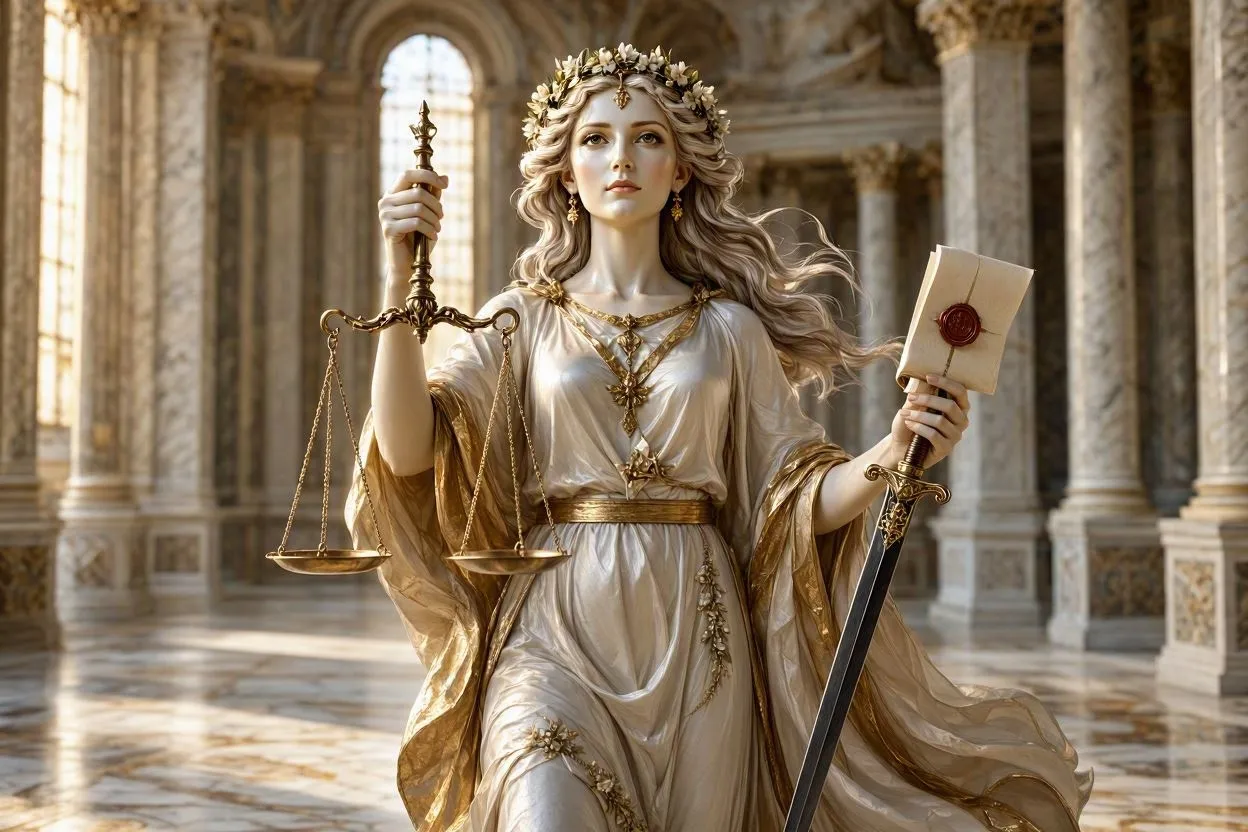
The Right to an Impartial Jury
The Sixth Amendment guarantees a criminal defendant the right to a trial “by an impartial jury.” The requirement is fundamental to the American criminal justice system because a jury is not merely a group of citizens assembled to vote on guilt. It is the constitutional institution entrusted with determining facts and reaching a verdict without deciding the case according to prejudice, personal interest, outside influence, or a fixed opinion formed before hearing the evidence.
The constitutional requirement of impartiality therefore reaches much further than the simple question of whether jurors personally dislike or favor a defendant. It concerns the entire process by which jurors are identified, questioned, selected, instructed, protected from outside influence, and, when necessary, removed. The process is designed to give the defendant a realistic opportunity to have guilt or innocence determined solely from the evidence presented in court and the law explained by the judge.
The Sixth Amendment’s jury guarantee includes the requirement that criminal juries be impartial. Cornell Law School Legal Information Institute: Right to Jury Trial The Supreme Court has repeatedly explained that jurors must be capable of setting aside preconceptions and deciding the case on the evidence presented in court. This principle becomes particularly important when prospective jurors have been exposed to pretrial publicity, have relationships with participants in the case, have expressed opinions about the defendant or the crime, or have some other interest that threatens their neutrality.
An impartial jury does not mean a jury composed of people who know nothing about the case, have never experienced anything similar, or possess no opinions about controversial subjects. Nor does it mean that jurors must be completely free of ordinary human assumptions and experiences. The constitutional question is whether the jurors who decide the case can perform their legal duty fairly: listen to the evidence, follow the court’s instructions, presume the defendant innocent, require the prosecution to prove guilt beyond a reasonable doubt, and decide the case without being controlled by an improper bias or outside influence.
This distinction is particularly important in modern criminal litigation. In a highly publicized prosecution, for example, it may be unrealistic to expect every prospective juror to have heard nothing about the case. The constitutional system instead asks whether an impartial jury can nevertheless be selected.
What Does an Impartial Jury Mean?
An impartial jury is a jury capable of deciding the case fairly and objectively based on the evidence and the law rather than on an improper predisposition concerning the defendant, the alleged crime, the witnesses, or the outcome.
The word impartial does not require jurors to be completely without opinions. Jurors enter the courtroom with life experiences, political views, professional backgrounds, religious or philosophical beliefs, personal histories, and assumptions about the world.
Those characteristics do not automatically make someone constitutionally incapable of jury service.
The central question is whether a particular characteristic or experience prevents the juror from performing the duties required by law.
For example, a prospective juror might have previously been the victim of a burglary. That experience does not automatically make the person incapable of serving on a burglary case. But if the juror states that people accused of burglary are almost always guilty and that the juror would have difficulty accepting the defendant’s presumption of innocence, the situation is fundamentally different.
Similarly, a juror might have heard about a widely reported criminal prosecution. Knowledge of the case alone does not necessarily establish unconstitutional bias. The relevant inquiry is whether the juror can set aside what was learned outside the courtroom and determine the case from the evidence admitted at trial.
The Supreme Court has emphasized that impartiality does not require jurors to be completely ignorant of the facts of a case. At the same time, exceptionally intense community hostility or prejudicial publicity can create circumstances in which ordinary assurances of impartiality are insufficient.
Thus, impartiality is a functional constitutional requirement.
The jury must actually be capable of performing its constitutional role.
The Sixth Amendment Foundation
The Sixth Amendment provides several interconnected protections for criminal defendants, including the rights to a speedy and public trial, an impartial jury, confrontation of witnesses, compulsory process, and assistance of counsel.
The impartial-jury requirement exists because criminal prosecution places enormous power in the hands of the government. The jury provides an independent decision-making institution between the government’s accusation and a criminal conviction.
The jury’s constitutional function is therefore not simply to count votes.
It serves as a safeguard against governmental error, prosecutorial overreach, unreliable evidence, and community pressure.
An impartial jury must be able to evaluate the prosecution’s evidence rather than simply confirm what the community already believes about the accused.
The Supreme Court has described the constitutional guarantee in terms of a trial in which jurors set aside preconceptions and decide guilt or innocence on the evidence presented in court.
This principle applies in both federal and state criminal proceedings because the Sixth Amendment’s fundamental jury protections have been incorporated against the states through the Fourteenth Amendment.
Impartiality Is Different From Having a “Jury of One’s Peers”
The Sixth Amendment also refers to a jury drawn from the state and district where the crime was committed.
This gives rise to the related concept of a jury of one’s peers and the constitutional requirement that jury pools be drawn from a reasonably representative cross section of the community.
These concepts are related but they are not identical.
An impartiality challenge asks whether the people selected to decide the case can fairly determine the defendant’s guilt.
A fair-cross-section challenge generally concerns whether the jury pool or venire from which jurors are selected has been improperly constructed through systematic exclusion of a distinctive group.
The defendant does not have a constitutional right to a jury containing people of the defendant’s own race, sex, occupation, religion, economic status, or social background.
The constitutional requirement is more precise.
The jury-selection system must not systematically exclude distinctive groups from jury venires, and individual jurors cannot be excluded through unconstitutional discrimination.
In Duren v. Missouri, the Supreme Court recognized the Sixth Amendment fair-cross-section requirement and held that systematic exclusion of women from jury venires violated the Constitution.
This distinction matters because a jury may be constitutionally impartial even though its members do not resemble the defendant personally.
Conversely, a jury-selection process may violate constitutional requirements even when there is no evidence that a particular seated juror personally disliked the defendant.
How the Law Attempts to Create an Impartial Jury
The American jury system uses several mechanisms to protect impartiality.
The most important include:
- the jury pool;
- the jury panel or venire;
- voir dire;
- challenges for cause;
- peremptory challenges;
- judicial instructions;
- removal of biased jurors;
- protection against outside communications;
- restrictions on juror exposure to extraneous information;
- remedies for juror misconduct; and
- in exceptional cases, a change of venue.
These mechanisms operate at different stages.
Some attempt to prevent biased people from reaching the jury.
Others attempt to prevent otherwise qualified jurors from becoming biased during the trial.
Still others provide remedies when improper influence occurs after the jury has been selected.
The system therefore treats impartiality as an ongoing condition rather than merely a qualification checked once at the beginning of the trial.
Jury Selection and the Venire
Before a jury is seated, prospective jurors are drawn from a larger community pool.
The group summoned for potential service is commonly called the venire or jury panel.
The selection process should be structured so that prospective jurors are drawn from the relevant community rather than handpicked by the parties or government.
The Supreme Court’s fair-cross-section doctrine places constitutional limits on systematic exclusion from jury pools. The requirement does not mean that every final jury must mirror the demographic composition of the community. Rather, it protects the integrity of the process through which prospective jurors are brought into consideration.
Once prospective jurors reach the courtroom, the court and the parties examine their suitability for service.
That examination is known as voir dire.
Voir Dire: Testing Juror Impartiality
Voir dire is the principal mechanism through which courts attempt to identify jurors who cannot fairly serve.
Cornell’s Legal Information Institute defines voir dire as the process through which potential jurors are questioned to determine their suitability for jury service, including their ability to remain impartial. Cornell Law School Legal Information Institute: Voir Dire
Questions may address subjects such as:
- whether the prospective juror knows the defendant;
- whether the juror knows a victim or witness;
- whether the juror has worked with someone involved in the case;
- whether the juror has heard about the prosecution;
- whether the juror has expressed an opinion about the case;
- whether the juror has experienced a similar crime;
- whether the juror has a financial or personal interest in the outcome;
- whether the juror can follow the court’s instructions;
- whether the juror can presume the defendant innocent;
- whether the juror can require proof beyond a reasonable doubt; and
- whether the juror can decide the case without regard to race, sex, religion, nationality, or other improper considerations.
Voir dire is therefore not simply an administrative exercise.
It is a constitutional screening mechanism.
The quality of voir dire can become especially important in cases involving publicity, racial tensions, controversial political issues, notorious crimes, or relationships between jurors and participants.
Voir Dire Does Not Require Jurors to Be Completely Ignorant
A common misunderstanding is that an impartial juror must have never heard of the defendant or the prosecution.
That is not the constitutional standard.
Modern criminal cases can generate enormous amounts of publicity. A prominent prosecution may be discussed on television, newspapers, websites, podcasts, and social media long before the first witness takes the stand.
The Supreme Court has recognized that exposure to publicity does not automatically establish juror bias.
In Irvin v. Dowd, however, the Court recognized that exceptionally pervasive and inflammatory publicity can create a situation in which a fair trial cannot realistically be expected from the local jury pool.
Later cases have emphasized that courts must evaluate the circumstances of each case rather than apply a simple numerical formula based on the amount of publicity.
In Skilling v. United States, for example, the Court concluded that extensive publicity concerning the Enron collapse did not establish that Skilling had been tried by an unconstitutional jury. The Court emphasized the quality of the voir dire and the characteristics of the actual jurors selected, rather than assuming that publicity automatically produced prejudice.
The lesson is important:
Publicity creates a potential impartiality problem; it does not automatically create an unconstitutional jury.
Actual Bias and Implied or Presumed Prejudice
Courts may encounter different forms of juror prejudice.
Actual Bias
Actual bias exists when a prospective juror cannot genuinely remain neutral.
The juror may openly state that the defendant is guilty, may express hostility toward the defendant, may reveal a personal relationship with a victim, or may otherwise demonstrate an inability to follow the court’s instructions.
For example:
“I have already decided that the defendant is guilty, and nothing I hear in this courtroom will change my mind.”
That statement presents an obvious impartiality problem.
A juror who cannot presume the defendant innocent or who refuses to require the prosecution to prove guilt beyond a reasonable doubt may likewise be disqualified.
Implied or Presumed Prejudice
Some circumstances can be so inherently problematic that courts may treat prejudice as established or strongly inferable without requiring the defendant to prove precisely what occurred inside the juror’s mind.
This is particularly relevant when extraordinary community hostility, inflammatory publicity, or an improper relationship makes ordinary assurances of impartiality unreliable.
The Supreme Court has recognized that extreme pretrial publicity may produce a presumption of prejudice in exceptional circumstances.
The doctrine is deliberately narrow.
Courts generally do not presume that jurors are biased simply because a case is famous, controversial, or heavily covered by the media.
Challenges for Cause
A challenge for cause asks the court to remove a prospective juror because the juror is legally incapable of serving impartially.
Typical grounds include:
- actual bias;
- a close relationship with a participant;
- personal interest in the outcome;
- inability to follow the law;
- inability to presume innocence;
- inability to consider the evidence fairly;
- financial conflicts;
- disqualifying statutory circumstances; or
- other facts demonstrating that the juror cannot perform the required duties.
Unlike a peremptory challenge, a challenge for cause normally requires a legally sufficient reason.
The judge decides whether the stated circumstances justify removal.
This makes challenges for cause particularly important to the constitutional right to an impartial jury.
A juror who openly acknowledges an inability to remain neutral should ordinarily not be left on the panel simply because the juror promises to “try” to be fair.
Peremptory Challenges
Peremptory challenges are different.
Traditionally, a party may exercise a limited number of peremptory challenges without having to establish ordinary cause.
They are intended to provide parties with additional protection during jury selection and to permit removal of jurors whom counsel believes may be unsuitable even when the available evidence does not establish a formal basis for a challenge for cause.
But the word “peremptory” does not mean constitutionally unlimited.
Peremptory challenges cannot be used as a vehicle for unconstitutional discrimination.
This became a major constitutional rule in Batson v. Kentucky.
Batson and Racial Discrimination in Jury Selection
In Batson v. Kentucky, the Supreme Court held that a prosecutor may not use peremptory challenges to exclude prospective jurors because of race.
The constitutional concern operates at two levels.
First, racial discrimination undermines equal protection.
Second, discriminatory jury selection damages the integrity of the jury as an institution of justice.
The defendant does not have a constitutional right to a jury containing members of the defendant’s own racial group. But the government cannot exclude jurors because of racial identity or the assumption that members of a racial group are inherently biased.
Batson v. Kentucky — Cornell Law School
The Batson principle has subsequently been extended beyond the precise circumstances of the original case.
In J.E.B. v. Alabama, the Supreme Court held that gender-based discrimination in jury selection violates equal protection principles. The Court rejected the idea that prospective jurors could be treated as interchangeable representatives of their sex.
The broader principle is that jurors must be evaluated as individuals rather than stereotyped members of a demographic category.
Batson Does Not Mean Every Diverse Jury Is Constitutionally Required
An important distinction is sometimes lost in discussions of Batson.
The Constitution does not require every jury to contain a particular racial or gender composition.
Suppose a community is racially diverse but, through random selection and lawful strikes, a particular jury happens to contain no members of one racial group.
That fact alone does not establish a Batson violation.
Batson addresses discriminatory exclusion of individual prospective jurors.
The fair-cross-section doctrine addresses systematic exclusion from the jury pool.
These are related but separate constitutional questions.
Challenges Based on Juror Experiences
Personal experience is one of the most difficult areas of jury selection.
A person who has experienced a crime similar to the charged offense may have useful knowledge and empathy. But the same experience can create a predisposition that affects impartiality.
Consider a defendant charged with domestic violence.
A prospective juror who previously experienced domestic abuse may be perfectly capable of deciding the case fairly. But if the juror says:
“I know exactly what people who commit this crime are like, and I would believe the alleged victim automatically,”
the statement may provide a substantial basis for a challenge for cause.
The important issue is not the juror’s identity as a victim.
It is the demonstrated inability to evaluate this defendant’s case individually.
The same principle applies to police officers, prosecutors, defense attorneys, physicians, forensic scientists, crime victims, relatives of incarcerated persons, and others whose professional or personal experiences might affect their ability to evaluate the evidence.
Experience alone does not equal bias.
But experience combined with an inability to follow the law may establish bias.
Jurors Who Know the Defendant or a Witness
Personal relationships can create obvious impartiality concerns.
A prospective juror may know:
- the defendant;
- the alleged victim;
- a police officer;
- a prosecutor;
- defense counsel;
- an important witness;
- a family member of a participant; or
- another person closely connected to the case.
The relationship does not automatically determine the constitutional result.
A distant acquaintance may present little concern.
A close friendship, family relationship, business relationship, or significant conflict may present a much more serious problem.
The court must determine whether the relationship creates a reasonable basis to doubt the person’s ability to decide the case impartially.
Jurors With Fixed Opinions
One of the clearest examples of bias occurs when a juror has already decided the defendant’s guilt or innocence.
A prospective juror might say:
“I have read everything about this case, and I am convinced the defendant committed the crime.”
Even if that person promises to “listen to the evidence,” the court must examine whether the opinion is genuinely open to reconsideration.
The constitutional problem becomes particularly serious when the juror believes that the prosecution does not need to prove anything further.
A criminal jury must begin from the presumption of innocence.
The defendant is not required to prove innocence.
The Presumption of Innocence and Jury Impartiality
The presumption of innocence is closely connected to impartiality.
A juror who assumes guilt at the beginning of trial is not merely making an incorrect assumption.
That juror is beginning the case from a position inconsistent with the constitutional structure of criminal adjudication.
The prosecution carries the burden of proof.
The defendant does not have to establish innocence.
The jury must evaluate whether the prosecution has proved every element of the charged offense beyond a reasonable doubt.
An impartial jury is therefore one that begins the trial without a predetermined conclusion about whether the prosecution has succeeded.
Pretrial Publicity
Pretrial publicity presents one of the most difficult modern threats to jury impartiality.
Publicity may include:
- news reports;
- televised interviews;
- police press conferences;
- social media;
- documentaries;
- podcasts;
- photographs;
- leaked evidence;
- statements by public officials;
- commentary by victims’ relatives;
- public accusations;
- online speculation; and
- inflammatory or false information.
The mere existence of publicity does not establish a constitutional violation.
The court must consider its nature, reach, timing, intensity, and likely effect on prospective jurors.
The distinction between knowledge and prejudice is crucial.
A juror may know that a defendant was arrested.
That does not necessarily mean the juror believes the defendant is guilty.
A juror may have heard allegations about the prosecution.
That does not necessarily mean the juror is incapable of disregarding those allegations.
But where publicity has saturated a community with inflammatory information, courts may need to take stronger protective measures.
Change of Venue
When local publicity is so extensive that an impartial jury cannot realistically be selected, a defendant may seek a change of venue.
The purpose is not to give the defendant a more favorable jury.
It is to move the trial to a location where jurors can decide the case without being overwhelmed by community prejudice.
Change of venue is therefore an impartiality mechanism rather than simply a strategic litigation tactic.
The Supreme Court’s decision in Skilling demonstrates why courts do not automatically transfer every highly publicized prosecution. The relevant question is whether an impartial jury can actually be selected, taking into account the publicity, community attitudes, voir dire, and characteristics of the seated jurors.
Voir Dire and Pretrial Publicity
Voir dire becomes particularly important when prospective jurors have heard about the case.
The court may ask:
- What have you heard?
- Where did you hear it?
- How recently did you hear it?
- Did you form an opinion?
- Do you remember specific allegations?
- Do you believe what you heard?
- Can you disregard information that is not introduced into evidence?
- Can you presume the defendant innocent?
- Can you decide the case solely on the evidence presented in court?
The Supreme Court has not required one universal script for publicity-related voir dire.
In Mu’Min v. Virginia, the Court held that the Constitution did not require a trial judge to ask prospective jurors detailed questions about the specific content of everything they had read or heard, although the adequacy of voir dire remains dependent on the circumstances.
The constitutional standard is therefore flexible rather than mechanical.
The Trial Judge’s Role
The trial judge has an especially important role in protecting jury impartiality.
The judge controls or supervises jury selection, rules on challenges for cause, determines the adequacy of protective measures, instructs jurors, and responds to allegations of juror misconduct.
The judge also observes prospective jurors directly.
This matters because impartiality determinations can depend on demeanor, hesitation, credibility, tone, and other characteristics that may not be apparent from a written transcript.
The Supreme Court has therefore traditionally given substantial respect to trial judges’ assessments of juror impartiality, while recognizing that constitutional violations remain subject to appellate review.
The Role of the Attorneys
Prosecutors and defense attorneys also have responsibilities during jury selection.
They investigate potential conflicts, identify possible bias, question prospective jurors when permitted, make challenges, and preserve objections.
Defense counsel may have particular reason to explore whether a juror:
- has already decided the case;
- has strong feelings about the charged conduct;
- knows a witness;
- has a personal experience affecting the case;
- cannot accept a legal principle;
- has been exposed to prejudicial publicity; or
- cannot follow the presumption of innocence.
The prosecution likewise has a legitimate interest in identifying jurors who cannot fairly evaluate its evidence.
But neither side may use jury selection as a mechanism for unconstitutional discrimination.
Juror Impartiality During the Trial
Impartiality does not end once the jury is sworn.
Jurors must remain neutral throughout the proceedings.
A juror may become exposed to improper information through:
- social media;
- news reports;
- conversations with friends;
- unauthorized research;
- communication with witnesses;
- communication with parties;
- internet searches;
- independent investigation;
- other jurors’ outside information; or
- attempts by outsiders to influence the jury.
This is why judges routinely instruct jurors not to investigate the case independently, communicate about it improperly, or consume outside information concerning the proceedings.
Outside Communications With Jurors
Improper communication with a juror can seriously threaten impartiality.
Jury tampering, for example, can involve bribery, threats, intimidation, private communication, or providing outside information for the purpose of influencing a juror’s decision.
When improper outside contact is alleged, the court may need to investigate the circumstances and determine whether the juror or jury was affected.
The seriousness of the problem depends on what occurred.
A harmless accidental encounter is different from an intentional attempt to influence a verdict.
But even apparently isolated communications can require careful judicial examination because the defendant is constitutionally entitled to have the verdict determined by the evidence and law rather than private external pressure.
Juror Misconduct
Juror misconduct may take many forms.
A juror may:
- conceal information during voir dire;
- conduct unauthorized research;
- discuss the case with outsiders;
- access prohibited media coverage;
- visit a crime scene independently;
- communicate with a witness;
- bring outside evidence into deliberations;
- make discriminatory statements;
- threaten other jurors;
- accept improper communications; or
- disregard the court’s instructions.
Not every violation automatically requires a new trial.
Courts generally examine whether the misconduct actually compromised the constitutional impartiality of the jury and what remedy is appropriate under the governing law.
The distinction between ordinary juror error and constitutionally significant misconduct is therefore important.
Racial Bias During Jury Deliberations
The Supreme Court has recognized a particularly serious constitutional concern when racial bias infects jury deliberations.
In Peña-Rodriguez v. Colorado, the Court held that the Constitution requires an exception to the traditional rule limiting inquiry into jury deliberations when a juror makes a clear statement indicating that racial animus was a significant motivating factor in the juror’s vote to convict.
The Court emphasized the unique constitutional harm caused when racial prejudice influences a criminal verdict.
This doctrine is significant because jury deliberations are ordinarily protected from judicial intrusion.
The constitutional protection of deliberative secrecy exists for important reasons. Jurors need to be able to discuss evidence, question assumptions, and deliberate freely.
But secrecy cannot become a shield for unconstitutional racial discrimination.
The No-Impeachment Principle and Its Limits
American evidence law generally places substantial restrictions on attempts to attack a jury verdict by questioning jurors about what happened during deliberations.
The rule protects the finality and integrity of jury decision-making.
Without some protection, jurors might face pressure, harassment, or post-verdict litigation based on ordinary disagreements within deliberations.
But constitutional exceptions exist.
Peña-Rodriguez illustrates one of the most important exceptions: when overt racial bias during deliberations seriously calls the fairness and impartiality of the verdict into question, constitutional interests can require judicial inquiry despite the general rule protecting jury deliberations.
Impartiality and Juror Diversity
An impartial jury should not be confused with a jury that contains people from every segment of society.
The Constitution does not guarantee proportional demographic representation on every individual jury.
A jury may lawfully contain twelve people who happen to share certain characteristics.
What matters is whether the process of selecting the jury complies with constitutional requirements and whether the jurors who actually decide the case can perform their duties impartially.
At the same time, the jury system is not constitutionally indifferent to the composition of the jury pool.
The fair-cross-section doctrine recognizes that systematic exclusion of distinctive groups from jury venires undermines the jury’s representative character.
Thus, American constitutional law protects both:
- the fairness of the individual jurors who decide the case, and
- the integrity of the process through which the community’s jury pool is formed.
These protections overlap but should not be treated as identical.
Impartiality and Peremptory Challenges
Peremptory challenges create an interesting tension.
On one hand, they can help lawyers remove jurors who appear unsuitable even when a challenge for cause may be difficult to establish.
On the other hand, unlimited use of peremptory challenges could permit discriminatory jury selection.
The constitutional response has been to restrict discriminatory uses without necessarily eliminating the traditional mechanism altogether.
Batson and later cases therefore establish that peremptory challenges remain subject to constitutional limitations.
The precise procedures for asserting and resolving a Batson objection vary by jurisdiction, but the basic constitutional principle is clear: jurors cannot be excluded through prohibited discriminatory criteria.
Impartiality in Capital Cases
The requirement of impartiality has particular significance in capital prosecutions.
Capital juries may have to determine not only guilt but also, where applicable, whether a defendant should receive the death penalty.
Jury selection can therefore address attitudes toward capital punishment and whether prospective jurors can follow the governing law.
The Supreme Court has recognized special constitutional requirements concerning jurors in capital sentencing proceedings.
These issues demonstrate an important principle: impartiality does not necessarily mean asking whether a juror has no personal moral views.
The question is whether the juror can put those personal views aside sufficiently to follow the law and fairly decide the case.
Impartiality Does Not Mean Neutrality Between Law and Evidence
A juror’s obligation is not to split the difference between prosecution and defense.
An impartial jury may acquit the defendant if the prosecution fails to meet its burden.
It may convict if the prosecution proves guilt beyond a reasonable doubt.
Impartiality therefore does not require an artificially equal attitude toward both sides.
The juror’s loyalty is to the legal process.
A juror should not favor the prosecution simply because the government has brought the case, but neither should the juror favor the defense merely because the defendant is presumed innocent.
The presumption of innocence is a legal starting point, not a predetermined verdict.
Impartial Jury vs. Independent Jury
The jury is expected to be independent.
This means that jurors must be able to reach their own conclusions rather than simply adopt the judge’s, prosecutor’s, defense attorney’s, media’s, or other jurors’ views.
Independence does not mean ignoring the law.
Jurors must follow the judge’s legal instructions.
They must evaluate the admitted evidence.
They must deliberate with other jurors.
But the ultimate verdict must represent the jurors’ lawful judgment rather than submission to improper external authority.
A Practical Example
Consider a highly publicized murder prosecution.
Before trial, local television stations repeatedly describe the defendant as the likely killer. Social media contains photographs of the defendant, allegations concerning the crime, and statements from community members demanding conviction.
When jury selection begins, many prospective jurors have heard about the case.
Three different jurors respond differently.
Juror A says:
“I have heard about it, but I have not formed an opinion. I can listen to the evidence and follow the judge’s instructions.”
That response does not automatically establish bias.
Juror B says:
“I think the defendant probably did it, but I will try to be fair.”
The court may need to examine whether this is merely an impression that can be set aside or a fixed opinion that compromises impartiality.
Juror C says:
“I have already decided the defendant is guilty. I would need the defense to convince me otherwise.”
Juror C presents a much more serious impartiality problem because the statement conflicts directly with the presumption of innocence and the prosecution’s burden of proof.
If sufficient impartial jurors cannot be selected from the community, the court may need to consider additional measures, potentially including expanded voir dire or a change of venue.
The objective is not to find jurors who have never heard anything.
The objective is to seat jurors capable of deciding the case according to the evidence and law.
A Practical Framework for Analyzing an Impartial-Jury Claim
When evaluating a constitutional impartial-jury issue, several questions are useful.
1. Was there a jury-selection problem?
Determine whether the complaint concerns the composition of the jury pool, the selection of individual jurors, or conduct after the jury was sworn.
2. Is the challenge based on actual bias?
Look for statements, relationships, experiences, financial interests, or other circumstances demonstrating that the juror could not fairly decide the case.
3. Was the problem discovered during voir dire?
If so, determine what the prospective juror said and how the court responded.
4. Was a challenge for cause made?
A party generally should raise known grounds for disqualification during jury selection.
5. Was a peremptory challenge involved?
If the issue concerns the use of a peremptory strike, determine whether the challenge was allegedly discriminatory.
6. Was there pretrial publicity?
Examine the nature, intensity, timing, geographic reach, and content of the publicity.
7. Did the actual seated jurors demonstrate bias?
The constitutional inquiry often focuses on the jury that actually decided the case rather than merely the existence of publicity or controversy.
8. Was there outside influence?
Consider whether jurors received information, communications, threats, inducements, or other influences outside the courtroom.
9. Did misconduct occur during deliberations?
If so, determine whether the conduct implicates ordinary jury error or a constitutional violation.
10. What remedy is available?
Depending on the circumstances and applicable law, possible remedies can include removal of a juror, substitution of an alternate juror, additional instructions, a mistrial, a new trial, or, in exceptional circumstances, a change of venue.
Common Misunderstandings About Impartial Juries
“Every juror must know nothing about the case.”
Not necessarily. Knowledge does not automatically equal bias.
“A juror who has experienced the same crime must be disqualified.”
Not automatically. Personal experience may create a potential concern, but the relevant question is whether the juror can decide the defendant’s case impartially.
“A diverse jury is constitutionally required.”
The Constitution protects against systematic exclusion and discriminatory selection, but it does not guarantee a particular demographic composition for every individual jury.
“A prosecutor can use peremptory challenges for any reason.”
No. Peremptory challenges are subject to constitutional limitations, including restrictions on discriminatory strikes.
“Any media coverage makes a trial unfair.”
No. Courts generally distinguish ordinary publicity from circumstances producing actual or presumptive prejudice.
“Once jurors are sworn, impartiality no longer matters.”
Incorrect. Jurors must remain impartial throughout the proceedings and must be protected from improper outside influence.
“A juror’s private bias is impossible to challenge.”
Not necessarily. Bias may be discovered during voir dire, through juror misconduct proceedings, or through other evidence permitted by law.
Federal and State Differences
The constitutional minimum applies nationwide, but jury-selection procedures vary considerably between federal and state courts.
Differences can concern:
- the size of jury panels;
- voir dire procedures;
- who conducts questioning;
- the number of peremptory challenges;
- the grounds and procedures for challenges for cause;
- jury questionnaires;
- procedures for addressing juror misconduct;
- alternate jurors;
- jury sequestration;
- venue-transfer rules;
- post-verdict juror inquiry; and
- state constitutional protections.
Federal constitutional law establishes a floor.
State constitutions and statutes may provide additional protections.
A person facing criminal charges must therefore distinguish between what the federal Constitution requires and what the particular state’s law provides.
Why the Impartial Jury Matters
The impartial-jury requirement protects more than an individual defendant.
It protects the legitimacy of the criminal justice system itself.
If jurors decide cases according to race, prejudice, public pressure, personal relationships, media narratives, or outside communications, the courtroom ceases to function as a place where legal rules and evidence determine outcomes.
The jury is intended to stand between accusation and conviction.
That function depends upon the ability of jurors to listen before deciding.
An impartial jury does not promise that the defendant will be acquitted.
It promises something more fundamental:
the verdict must come from a lawful and fair decision-making process rather than from a predetermined judgment.
Key Takeaways
- The Sixth Amendment guarantees criminal defendants the right to an impartial jury.
- Impartiality means that jurors must be capable of deciding the case according to the evidence and law rather than improper bias or outside influence.
- A juror does not have to be completely ignorant of the case to be impartial.
- Voir dire is a principal mechanism for identifying potential juror bias.
- Challenges for cause may remove jurors who cannot fairly serve.
- Peremptory challenges are limited and cannot be used for unconstitutional discriminatory purposes.
- Batson v. Kentucky prohibits racial discrimination in peremptory jury strikes, while J.E.B. v. Alabama prohibits gender-based discrimination.
- The fair-cross-section requirement addresses systematic exclusion from jury pools and is distinct from individual juror impartiality.
- Extraordinary pretrial publicity can create serious constitutional concerns and, in exceptional circumstances, presumed prejudice.
- A change of venue may be appropriate when an impartial jury cannot realistically be selected in the original community.
- Jurors must remain impartial after selection and must not be influenced by outside information or communications.
- Peña-Rodriguez v. Colorado recognizes a constitutional exception allowing inquiry into deliberations in certain cases involving overt racial bias.
- The exact procedures governing jury selection and juror challenges vary between federal and state courts.
Frequently Asked Questions
What is the constitutional right to an impartial jury?
It is the Sixth Amendment right of a criminal defendant to have guilt or innocence determined by jurors who can fairly evaluate the evidence and follow the law without improper bias or outside influence.
Does a juror have to be completely neutral about the defendant?
A juror must be impartial, but the Constitution does not require complete ignorance or the absence of every personal opinion. The relevant question is whether the juror can set aside improper preconceptions and decide the case according to the evidence and law.
What is voir dire?
Voir dire is the process of questioning prospective jurors to determine whether they are qualified and capable of serving impartially.
What is a challenge for cause?
A challenge for cause asks the court to remove a prospective juror because a legally recognized reason demonstrates that the juror cannot fairly serve.
What is a peremptory challenge?
A peremptory challenge permits a party to remove a limited number of prospective jurors without establishing ordinary cause. However, constitutional restrictions prohibit discriminatory uses of such challenges.
Can a juror who has heard about the case still serve?
Yes. Knowledge of a criminal case does not automatically establish bias. The critical question is whether the juror can set aside outside information and decide the case from the evidence presented in court.
Can pretrial publicity violate the right to an impartial jury?
Yes. In exceptional circumstances, pervasive and inflammatory publicity or community hostility can make an impartial trial impossible. Courts may respond through more extensive voir dire, protective measures, or, when necessary, a change of venue.
Does the defendant have a right to a jury that looks like the defendant?
No. The Constitution does not guarantee a jury containing people of the defendant’s own race, sex, occupation, religion, or social background. It does, however, prohibit certain forms of discriminatory jury selection and protects the fair-cross-section principle.
What happens if a juror becomes biased during trial?
The court may investigate the circumstances and, depending on the applicable law and seriousness of the problem, may remove the juror, substitute an alternate juror, issue additional instructions, declare a mistrial, or impose another appropriate remedy.
Can juror misconduct lead to a new trial?
Potentially. The consequences depend on the nature of the misconduct, whether it affected impartiality, applicable procedural rules, and whether the misconduct rises to the level of a constitutional violation.
Is racial bias by a juror constitutionally significant?
Yes. Racial bias can fundamentally undermine the impartiality of a criminal jury. In Peña-Rodriguez v. Colorado, the Supreme Court recognized a constitutional exception permitting inquiry into jury deliberations when a juror makes a clear statement indicating that racial animus was a significant motivating factor in the vote to convict.
Is an impartial jury the same as a unanimous jury?
No. Impartiality concerns the neutrality and fairness of the jurors. Unanimity concerns the number of jurors who must agree on the verdict. These are separate constitutional questions, although both are important components of modern criminal jury practice.
Conclusion
The right to an impartial jury is one of the central protections within American criminal procedure. It recognizes that a criminal conviction should not result merely because an accusation is serious, the community is angry, the media has formed an opinion, or a juror has entered the courtroom with a fixed conclusion.
The constitutional system instead requires a decision-making body capable of listening, evaluating, deliberating, and applying the law.
That protection begins before trial through the construction of a lawful jury pool and continues through voir dire and jury selection. It is reinforced through challenges for cause, constitutional limitations on peremptory challenges, judicial instructions, and procedures designed to protect jurors from outside influence. It can remain relevant throughout deliberations and even after a verdict when serious misconduct or unconstitutional racial bias is alleged.
The impartial-jury guarantee therefore represents more than a procedural technicality.
It embodies a central idea of American criminal justice: the government may accuse a person, but the ultimate judgment of guilt must come from an independent jury capable of deciding the case fairly, according to the evidence presented in court and the law governing the prosecution.
The information provided in this article ("The Right to an Impartial Jury") is for general educational and informational purposes only and does not constitute formal legal advice. Reading this content does not create an attorney-client relationship. Laws vary by jurisdiction; consult a licensed attorney for specific legal matters.

Tsvety, LL.M., M.A.
Today’s Quiz
Property Law
10 real questions, free, no account needed. See how well you actually know property law.
Free This Week
Open this week’s Legal Concept Presentation
A downloadable, branded slide deck explaining one key legal term in depth — free every week, the full library included with All-Access.
Interactive Legal Suite
Advance Your Legal Analysis
Explore our interactive decision trees, litigation pipeline builders, and procedural court simulators — designed specifically for law students and practitioners.
Access Interactive Tools →Enjoy The Law To Know?
Tell Google you’d like to see more from us in Search and AI Overviews.
Start small
Try us for a few dollars, or for nothing. No account needed for the first three.
- Free rights card Free
Five sentences to show the police if you are arrested abroad, in many languages.
A whole chapter of black-letter law on one printable page. Free sample.
Inheritance, marriage, children and property in one European country, in one PDF.
72 editable templates: leases, wills, agreements, notices and more.
- Pocket guides $12
Short PDF reference books with closed-book self-checks.
Discussion
Log in to join the discussion.
No comments yet — be the first to add to the discussion.